






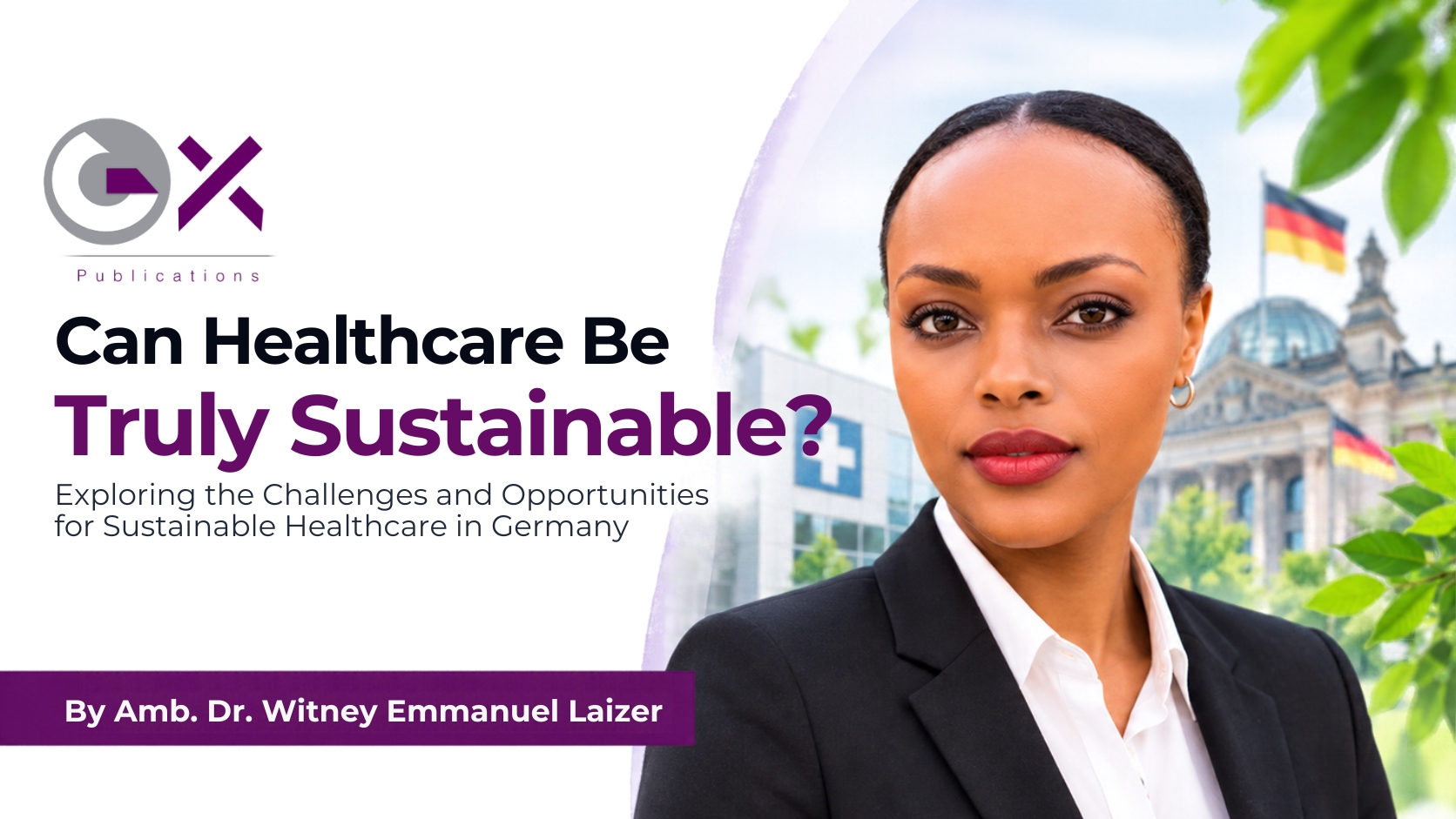
Healthcare exists to protect human life, but the system that delivers that care also consumes enormous amounts of energy, materials, medicines, transport and infrastructure. This creates an important question for Germany: Can healthcare become truly sustainable without compromising quality, access or patient safety?
The answer is increasingly tied to how Germany approaches climate change, healthcare costs, workforce pressures and digital transformation. The German healthcare system is already moving toward greater sustainability, but the transition is complex. Sustainable healthcare is not simply about reducing carbon emissions. It is about building a health system that can remain effective, affordable, resilient and environmentally responsible over the long term.
What Does Sustainable Healthcare Really Mean?
Sustainable healthcare means delivering high-quality care while reducing unnecessary environmental, financial and social burdens.
In practice, this includes energy-efficient hospitals, responsible procurement, reduced medical waste, sustainable transport, efficient use of medicines and better prevention. It also includes a workforce that can operate effectively without being overwhelmed by administrative and operational pressures.
This broader view is important because sustainability in healthcare has several dimensions:
- Environmental sustainability: reducing emissions, minimizing waste, and using resources more efficiently.
- Economic sustainability: maintaining affordable and financially stable healthcare.
- Social sustainability: ensuring equitable access and protecting healthcare workers.
- Clinical sustainability: providing safe and effective treatment over the long term.
- Germany therefore faces a much bigger challenge than simply making hospitals “greener.”
Why Sustainability Matters for the German Healthcare System
Germany has one of Europe's largest and most developed healthcare sectors. The healthcare economy generated almost €498.4 billion in gross value added in 2025 and accounted for around 12.4% of total economic value added. More than one in six employed people in Germany works in the healthcare economy.
That scale brings both responsibility and opportunity.
The environmental footprint is significant. Research supported by Germany's Federal Ministry of Health estimates that healthcare accounts for roughly 6% of Germany's greenhouse gas emissions, when direct and indirect emissions are considered.
This creates an unusual situation: healthcare must protect people from the health consequences of climate change while also reducing its own contribution to environmental pressures.
That is one of the central contradictions behind healthcare sustainability Germany.
Climate Change Is Becoming a Healthcare Issue
Climate change is no longer an issue that sits outside healthcare planning.
Heat waves can put extra pressure on hospitals and emergency services. Extreme weather can also disrupt healthcare infrastructure and supply chains, making it harder to provide essential services. At the same time, changing environmental conditions may increase the risk of infectious diseases, respiratory problems, and other health-related issues.
At the same time, hospitals consume substantial amounts of electricity, heating, water, pharmaceuticals, equipment and disposable materials.
Germany has therefore begun treating climate protection and climate adaptation as part of healthcare planning. The Federal Ministry of Health has supported research into the greenhouse-gas emissions of the German health system and projects focused on improving resource efficiency and ecological sustainability in areas including outpatient care and nursing facilities.
The practical lesson is straightforward: climate resilience should be designed into healthcare rather than added after infrastructure has already been built.
The Financial Challenge: Can Healthcare Remain Affordable?
Environmental sustainability and financial sustainability are closely connected.
Germany is currently dealing with pressure on statutory health insurance financing. In 2026, the Federal Ministry of Health's Financial Commission for Health presented recommendations aimed at stabilising statutory health insurance contribution rates from 2027 while addressing structural pressures on revenues and expenditure.
This matters because sustainability investments often require upfront spending.
Replacing inefficient equipment, renovating buildings, improving energy systems or introducing new digital infrastructure can cost money before savings become visible.
The better approach is to evaluate sustainability investments across their full life cycle.
For example, an energy-efficient hospital system may require substantial capital expenditure initially but reduce energy costs over many years. Similarly, better preventive care can potentially reduce avoidable demand for expensive treatment.
This is where healthcare costs in Germany and environmental sustainability come together.
The Workforce Is Central to Healthcare Sustainability
No sustainable health system can function without a sustainable workforce.
Germany had almost 6.2 million people working in healthcare at the end of 2024, according to Destatis. Employment increased by approximately 102,000 people compared with the previous year.
Yet workforce growth does not automatically solve staffing pressures.
Healthcare professionals are dealing with growing demand, demographic changes, heavier administrative workloads, and the need to keep up with new technologies. For healthcare to be sustainable in the long term, it must also consider the working conditions of doctors, nurses, therapists, technicians, and other healthcare staff.
A hospital that reduces energy consumption but exhausts its workforce has not achieved genuine sustainability.
Digitalisation Could Become a Major Sustainability Tool
One of Germany's strongest opportunities lies in healthcare digitalisation Germany.
Digital patient records, data-driven care, telemedicine, digital coordination and better information exchange can reduce duplication and improve how services are organised.
Germany's updated digitalisation strategy aims to develop the health and care system into a people-centred, digitally supported ecosystem by 2030. The Federal Ministry of Health also reports that implementation has started for more than 90% of the strategy's measures.
The electronic patient record is one practical example. Better access to relevant patient information can help reduce unnecessary duplicate examinations and improve coordination between healthcare providers.
However, digitalisation is not automatically sustainable. Data centres consume energy, electronic equipment has environmental costs and digital systems require investment and cybersecurity protection.
The goal should therefore be smart digitalisation, not digitalisation for its own sake.
What Could Green Healthcare Germany Look Like?
A more sustainable German healthcare system could bring together several practical measures:
Greener hospitals
Hospitals can improve energy efficiency, use renewable energy where feasible, reduce water consumption and redesign waste management.
Sustainable procurement
Healthcare organisations can consider the full environmental and economic life cycle of medicines, devices, equipment and other supplies when procurement decisions are made.
Prevention before intensive treatment
Preventing illness can help reduce pressure on healthcare resources while also improving overall population health. This makes public health, earlyintervention and community-based care important parts of building a more sustainable healthcare system.
More efficient care pathways
Patients should receive the rightcare at the right location. Better integration between primary care, specialist services, hospitals and community care can reduce unnecessary duplication.
Climate-resilient infrastructure
Hospitals and care facilities need contingency planning for heat, extreme weather, power disruption and supply-chain interruptions.
What Research Can Teach Us
Academic research has an important role in connecting sustainability theory with healthcare practice. Work such as Dr. Witney's Dissertation, where relevant to the wider discussion of healthcare and sustainability, can be considered alongside empirical research, health policy evidence and real-world implementation studies.
The important principle is that healthcare sustainability should be evaluated using evidence rather than slogans.
A successful healthcare transformation Germany strategy should measure outcomes such as emissions, energy use, costs, patient outcomes, workforce wellbeing, access and service resilience together.
A Practical Roadmap for Healthcare Sustainability Germany
Germany does not need to choose between better healthcare and sustainability.
A practical roadmap would begin with measurement. Healthcare organisations need reliable information about their emissions, energy consumption, waste, procurement and costs.
The next step is prioritisation. Not every sustainability initiative will deliver the same value. Organisations should identify changes that improve environmental performance while also supporting clinical quality or financial efficiency.
Finally, sustainability should become part of routine decision-making. New hospitals, technologies, procurement contracts and care models should be assessed not only for immediate cost and clinical performance but also for their long-term environmental and social consequences.
The Future of Sustainable Healthcare in Germany
So, can healthcare be truly sustainable?
Yes, but only if sustainability is understood as a system-wide responsibility.
Germany already has important foundations: a large healthcare workforce, substantial research capacity, growing digital infrastructure and increasing attention to climate and resource efficiency. At the same time, healthcare costs, demographic change, workforce pressures and environmental risks make the transition increasingly urgent.
The future of sustainable healthcare Germany will not be defined by one technology or one policy. It will depend on thousands of decisions made by hospitals, clinicians, policymakers, insurers, researchers, suppliers and patients.
A sustainable healthcare system is not simply one that spends less or adopts the latest technology. It is one that consistently improves health outcomes while using financial, human and environmental resources in a responsible and balanced way.
For Germany, that is the real opportunity: to make sustainability part of how healthcare is designed, financed and delivered, rather than treating it as an additional objective.




Comments (0)
No comments yet. Be the first to share your thoughts!
Leave a Reply
Your email address will not be published. Required fields are marked *