






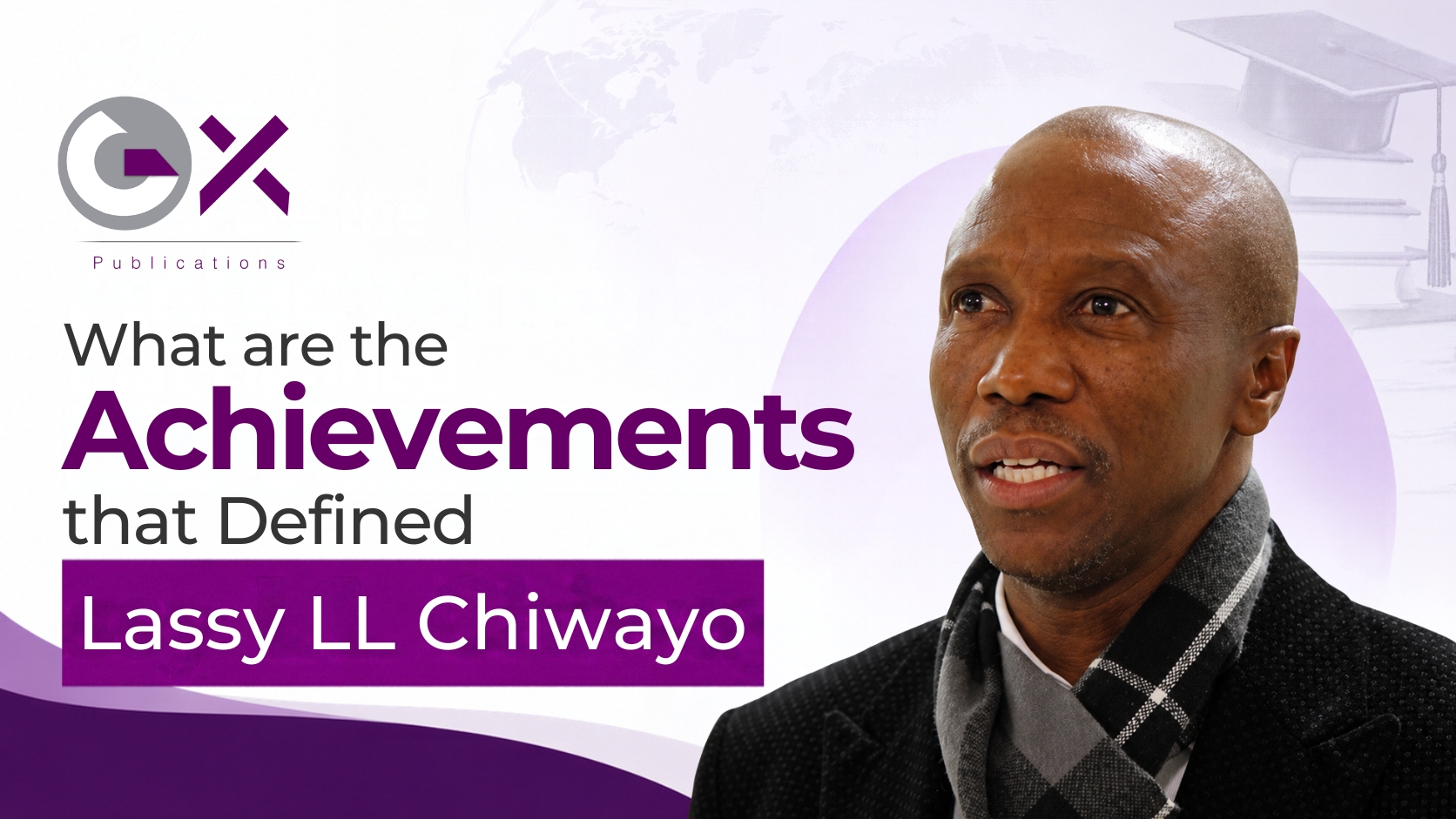
The story of Lassy LL Chiwayo, also known as Lassy Chiwayo, is a story of political change, public service and leadership across several important periods in South Africa's history.
His journey did not begin in a government office. It began during the apartheid era, when he became involved in political activism and was eventually imprisoned on Robben Island. Years later, he entered the institutions of the new democratic South Africa and developed a career that included parliamentary representation, provincial government, municipal leadership and diplomacy.
Looking at the achievements of Lassy Chiwayo through this timeline provides a clearer understanding of his contribution and the experiences that shaped his career.
The Robben Island Journey That Shaped Lassy Chiwayo
Before discussing his political offices, it is important to understand the Robben Island chapter of the Lassy LL Chiwayo biography.
Chiwayo became involved in anti-apartheid activism while still young. Historical biographical records state that he was imprisoned on Robben Island in 1988 because of his political activities. The Robben Island Museum's official political-prisoner database lists Lazarus Chiwayo, while South African History Online also includes him on its list of Robben Island political prisoners.
His time on the island placed him among political prisoners who experienced imprisonment while continuing to discuss politics, society and the future of South Africa. A historical account of Robben Island prison life by Cecyl Esau specifically recalls friendships with Lassy Chiwayo and other prisoners from Mpumalanga.
Chiwayo later spoke about how the experience affected his outlook. Reporting on his reflections describes how his views changed through his interaction with ANC leaders and other prisoners on the island. He was released as part of the wider release of political prisoners during the transition away from apartheid.
This period is significant because it provides the foundation for understanding Lassy Chiwayo leadership. The Robben Island experience connected political struggle with ideas of discipline, dialogue and responsibility. Decades later, Chiwayo described Nelson Mandela's leadership as being based strongly on listening and example.
From Political Prisoner to Politician
The end of apartheid created a new opportunity for political activists to participate directly in democratic institutions. For Lassy Chiwayo, that transition became the beginning of a substantial political career.
In the 1994 democratic elections, Chiwayo was elected as an ANC representative to the Senate, then the upper house of South Africa's Parliament, representing the Eastern Transvaal. He subsequently moved to the Mpumalanga Provincial Legislature, where he served in the government led by Premier Mathews Phosa. His responsibilities included Sport and Recreation, followed later by Finance.
His involvement in youth politics was also significant. In 1998, Chiwayo challenged Malusi Gigaba for the presidency of the ANC Youth League. Contemporary reporting at the time described the contest and noted Chiwayo's political involvement within the organisation.
His political career therefore developed rapidly. Within only a few years of the democratic transition, he had moved from political struggle into senior provincial responsibilities.
His Role in Mpumalanga Government
The next stage of Lassy Chiwayo career demonstrated that his responsibilities extended beyond elected representation.
After his initial provincial appointment, he became associated with finance and provincial administration. Government records from the period identify his involvement in senior provincial government functions, while a South African government budget document later records Chiwayo as chairperson of the board of the Mpumalanga Tourism and Parks Agency.
His political career also included service as Majority Chief Whip in the Mpumalanga Provincial Legislature after the 1999 election. He later entered the National Assembly in 2001.
This period illustrates an important feature of South African leadership after 1994: activists who had opposed the apartheid system increasingly had to adapt to the practical demands of legislation, administration, budgeting and institutional governance.
Lassy Chiwayo as Mayor of Mbombela
After spending time outside frontline politics and building business interests, Chiwayo returned to politics in 2008, when he became executive mayor of Mbombela Local Municipality.
His return came at a difficult moment for the municipality. The provincial government had intervened under Section 139 of the Constitution because of serious administrative and governance problems. Official provincial records stated that the intervention addressed areas including human resources, service delivery, management, financial viability and governance. Chiwayo was appointed mayor following the resignation of his predecessor.
His term also coincided with Mbombela's preparations for the 2010 FIFA World Cup. Government reporting stated that earlier municipal problems had threatened preparations, while subsequent reporting recorded progress on the stadium and related projects.
One particularly notable episode came when Chiwayo announced that he intended to donate his mayoral salary, reported at roughly R480,000 per year, to charitable causes. News24 reported that he cited support for people affected by HIV/AIDS and youth leadership development among the causes he wanted to support.
From Local Government to Diplomacy
Chiwayo's career later expanded beyond domestic politics. After leaving the mayoral office following the 2011 local elections, he entered South Africa's diplomatic service and served as consul-general in Shanghai, China. Contemporary reporting describes his diplomatic appointment and training through the Department of International Relations and Cooperation.
Earlier, in 2013, DIRCO material also identified Chiwayo in a senior role dealing with Central and East Asia and regional organisations, reflecting his broader involvement in international relations.
This stage added another dimension to the Lassy Chiwayo achievements: his experience moved from liberation politics and domestic government to representing South African interests internationally.
What the Lassy Chiwayo Journey Tells Us
The strongest way to understand the Lassy Chiwayo legacy is to look at the complete journey.
He experienced political imprisonment on Robben Island, entered democratic Parliament after 1994, served in the Mpumalanga government, participated in youth politics, returned to frontline politics as Mbombela mayor and later represented South Africa in diplomacy.
Each stage required a different form of leadership. The island represented political resistance and personal transformation. Parliament required legislative participation. Provincial government demanded administration and policy implementation. The mayoral office brought direct responsibility for municipal governance, while diplomacy required international representation.
That progression makes Lassy LL Chiwayo biography more than a list of positions. It is a record of a career developing alongside South Africa's transition from apartheid to democratic government.
Conclusion
The achievements of Lassy Chiwayo are best understood as a journey rather than a single event. His years on Robben Island formed an important part of his political identity. His post-1994 career then took him through Parliament, provincial government and municipal leadership before leading to diplomatic service.
From the island where he was imprisoned as a young activist to the government institutions he later served, the journey of Lassy LL Chiwayo reflects one of the defining transitions in South African political history.
His story offers a useful reminder that public leadership can develop through very different stages: struggle, political participation, administration, local government and international service.

Comments (0)
No comments yet. Be the first to share your thoughts!
Leave a Reply
Your email address will not be published. Required fields are marked *