






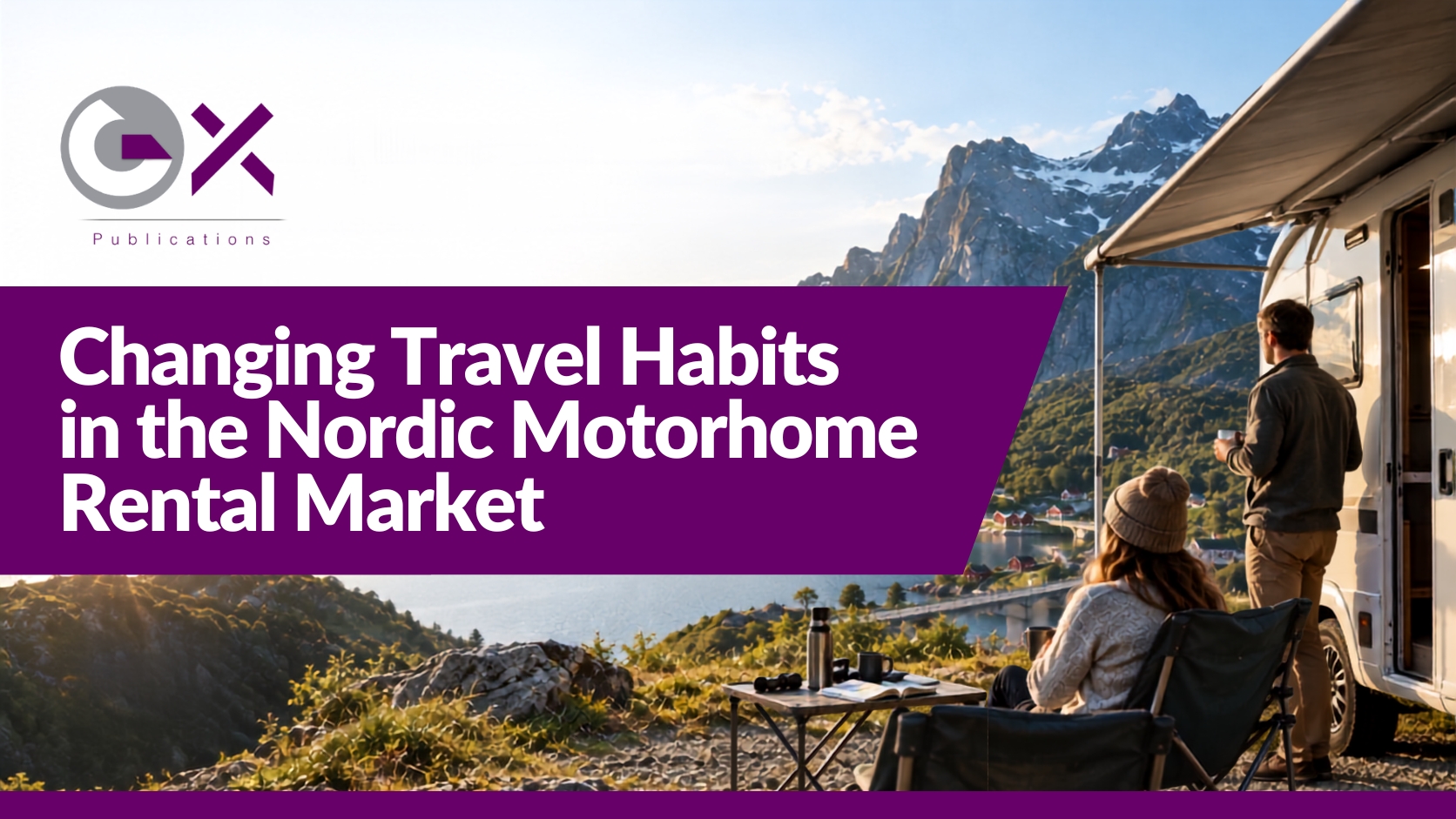
Travel habits rarely change overnight. They evolve through economic conditions, customer expectations, destination preferences and unexpected disruptions. The Nordic motorhome rental market provides a particularly useful example of this evolution.
An analysis of 24,322 motorhome rental transactions from 2017 to 2025 reveals significant changes in how customers plan and experience their holidays. Rental duration, booking behaviour, customer origin and segment composition all shifted over the period.
The most striking finding is that the post-pandemic market did not simply return to its old pattern. Customers increasingly showed longer rental durations, while advance booking behaviour recovered strongly after the disruption of 2020.
What the Data Shows
The following figures provide a concise picture of the changing travel behaviour observed across the dataset.
| Year | Transactions | Avg. Rental Duration | Avg. Booking Window | International Customers | Family Customers |
| 2017 | 2,748 | 11.3 days | 89.0 days | 83.3% | 67.2% |
| 2018 | 3,613 | 11.0 days | 93.7 days | 84.1% | 67.3% |
| 2019 | 3,493 | 11.4 days | 88.9 days | 82.2% | 66.3% |
| 2020 | 1,918 | 9.7 days | 41.8 days | 43.4% | 68.7% |
| 2021 | 1,654 | 12.2 days | 69.0 days | 53.4% | 68.4% |
| 2022 | 2,772 | 13.2 days | 105.8 days | 84.4% | 69.1% |
| 2023 | 2,484 | 12.6 days | 99.2 days | 83.9% | 66.8% |
| 2024 | 2,774 | 12.8 days | 99.7 days | 85.1% | 61.4% |
| 2025 | 2,827 | 13.1 days | 90.6 days | 83.5% | 55.7% |
The table highlights three major developments: longer rentals, changing booking behaviour and a changing customer mix.
Motorhome Holidays Are Becoming Longer
Between 2017 and 2019, the average rental duration remained relatively stable at approximately 11 days.
In 2020, however, it fell to just 9.7 days. This was the most disrupted year in the dataset, and the shorter rental duration coincided with a dramatic reduction in international demand and booking lead times.
The recovery was striking.
Average rental duration increased to 12.2 days in 2021, reached 13.2 days in 2022, and remained above 12.5 days through 2025. By 2025, customers were renting for an average of 13.1 days, around 1.8 days longer than in 2017.
This represents a meaningful shift in motorhome travel.
Longer rentals potentially allow customers to travel more slowly, visit multiple destinations and make greater use of the motorhome as both transportation and accommodation.
For operators, the implication is practical: fleet planning based on historical seven- or ten-day assumptions may underestimate how customers increasingly use motorhomes for extended holidays.
Booking Behaviour Changed Dramatically
Rental duration is only one part of the story. Booking behaviour changed even more sharply.
Before 2020, the average booking window was approximately 89–94 days. In 2020, this collapsed to just 41.8 days.
Customers were understandably reluctant or unable to plan several months ahead when travel conditions were uncertain.
The recovery after 2020 is particularly important. The average booking window increased to 69 days in 2021, then jumped to 105.8 days in 2022.
Although it subsequently moderated, customers were still booking substantially in advance: 99.2 days in 2023, 99.7 days in 2024 and 90.6 days in 2025.
This demonstrates why Nordic travel trends should be interpreted longitudinally. A single year's data can produce a misleading picture of customer behaviour.
International Travellers Remain the Core Market
The Nordic motorhome industry has a strong international dimension.
From 2017 to 2019, international customers represented more than 82% of annual transactions. During 2020, that proportion fell dramatically to 43.4%.
The change was not permanent.
International customers represented 53.4% in 2021 and returned to 84.4% in 2022. The proportion remained above 83% in each year from 2022 through 2025, reaching 85.1% in 2024.
This is an important finding for Nordic tourism and motorhome tourism more broadly. The market depends heavily on cross-border travel, meaning that international tourism conditions can directly influence rental demand.
It also reinforces the need for rental companies to understand customers beyond nationality. Language, travel planning, booking timing, destination knowledge and holiday duration can all influence the rental experience.
Customer Segmentation Is Changing Too
The transaction data also provides evidence that customer segmentation is not static.
Families represented approximately two-thirds of transactions during the earlier years. Their share reached 69.1% in 2022, but subsequently declined to 61.4% in 2024 and 55.7% in 2025.
At the same time, the proportion of Couple transactions increased.
| Year | Family | Couple |
| 2017 | 67.2% | 32.8% |
| 2019 | 66.3% | 33.7% |
| 2021 | 68.4% | 31.6% |
| 2022 | 69.1% | 30.9% |
| 2024 | 61.4% | 38.6% |
| 2025 | 55.7% | 44.3% |
This is one of the most interesting examples of travel behaviour evolution in the data.
The market appears to be becoming more balanced between family and couple travel. That does not necessarily mean that families are disappearing. Rather, it indicates that couples are becoming an increasingly important customer group.
For marketers, this creates an opportunity to move beyond one-size-fits-all communication and develop offers around different travel preferences and holiday motivations.
What This Means for the Nordic Rental Market
The data provides several practical lessons for businesses operating in the Nordic rental market.
1. Plan for longer rentals
The increase from 11.3 average rental days in 2017 to 13.1 in 2025 has implications for fleet availability, pricing and utilisation.
2. Treat booking windows as dynamic
The fall from 89 days in 2017 to 41.8 days in 2020—and subsequent recovery above 90 days—shows how quickly customer planning can change.
3. Protect international demand
With international customers accounting for more than 83% of transactions again in 2025, international marketing remains strategically important.
4. Revisit customer segmentation regularly
The decline in the family share from 69.1% in 2022 to 55.7% in 2025 suggests that customer composition deserves continuous monitoring.
The Future of Motorhome Travel
The most valuable lesson from these changing travel habits is that customer behaviour should never be treated as fixed.
The Nordic motorhome rental market experienced an extraordinary disruption in 2020, but the subsequent years reveal more than simple recovery. Customers are now demonstrating longer rental durations, renewed advance planning and a gradually changing balance between family and couple travellers.
For businesses, this means that historical transaction data is not simply a record of what happened. Properly analysed, it becomes a tool for understanding customer travel behaviour, anticipating demand and making better decisions about fleet management, pricing, marketing and customer experience.
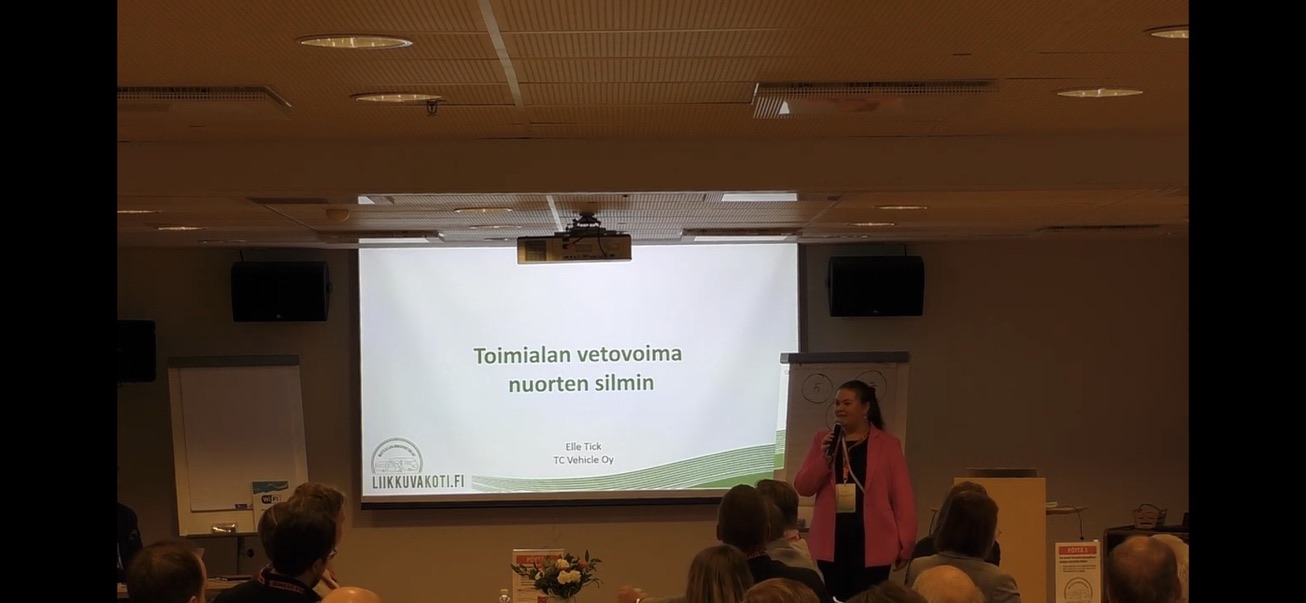
This is also the central value of the longitudinal perspective explored in Dr. Elle's Dissertation: the real insight is not found in one year's bookings, but in understanding how customer behaviour changes from one period to the next.
The future of motorhome tourism will therefore depend not only on attracting more travellers, but on understanding how those travellers are changing—and adapting the rental experience accordingly.



Comments (0)
No comments yet. Be the first to share your thoughts!
Leave a Reply
Your email address will not be published. Required fields are marked *