







Teaching can be deeply rewarding. A teacher watches students understand difficult ideas, gain confidence and take their next step in life. Yet the same profession can also become exhausting when lesson planning, marking, administration, classroom management, parent communication and emotional demands begin to fill every available hour.
The problem is not simply being busy.
When pressure continues without enough recovery, support or control, teacher stress can gradually affect motivation, energy and professional well-being. In more persistent cases, it can contribute to teacher burnout.
So, how can teachers protect themselves without compromising the quality of their teaching?
Preventing burnout is not about giving teachers another list of responsibilities to manage. Instead, it requires a practical and balanced approach that encourages healthy professional boundaries, supportive relationships, sustainable work habits, and positive changes in the workplace.
Research on teacher well-being increasingly supports this broader view. A recent research thesis examining teacher stress and burnout found that workload, administrative responsibilities, classroom demands, emotional pressures and work-life imbalance interact with resources such as resilience, social support, autonomy and recovery.
Teacher Burnout Is More Than Feeling Tired
Every teacher has difficult days.
A demanding class, a heavy marking schedule or an important school event can create temporary teacher stress. That does not automatically mean burnout.
Burnout is more persistent. The World Health Organization describes occupational burnout through three major dimensions: exhaustion, increasing mental distance or cynicism toward work, and reduced professional efficacy.
This distinction is important because the solution to a stressful week may simply be rest and better planning. Persistent burnout, however, may require changes to workload, support and working conditions.
Common Warning Signs of Teacher Burnout
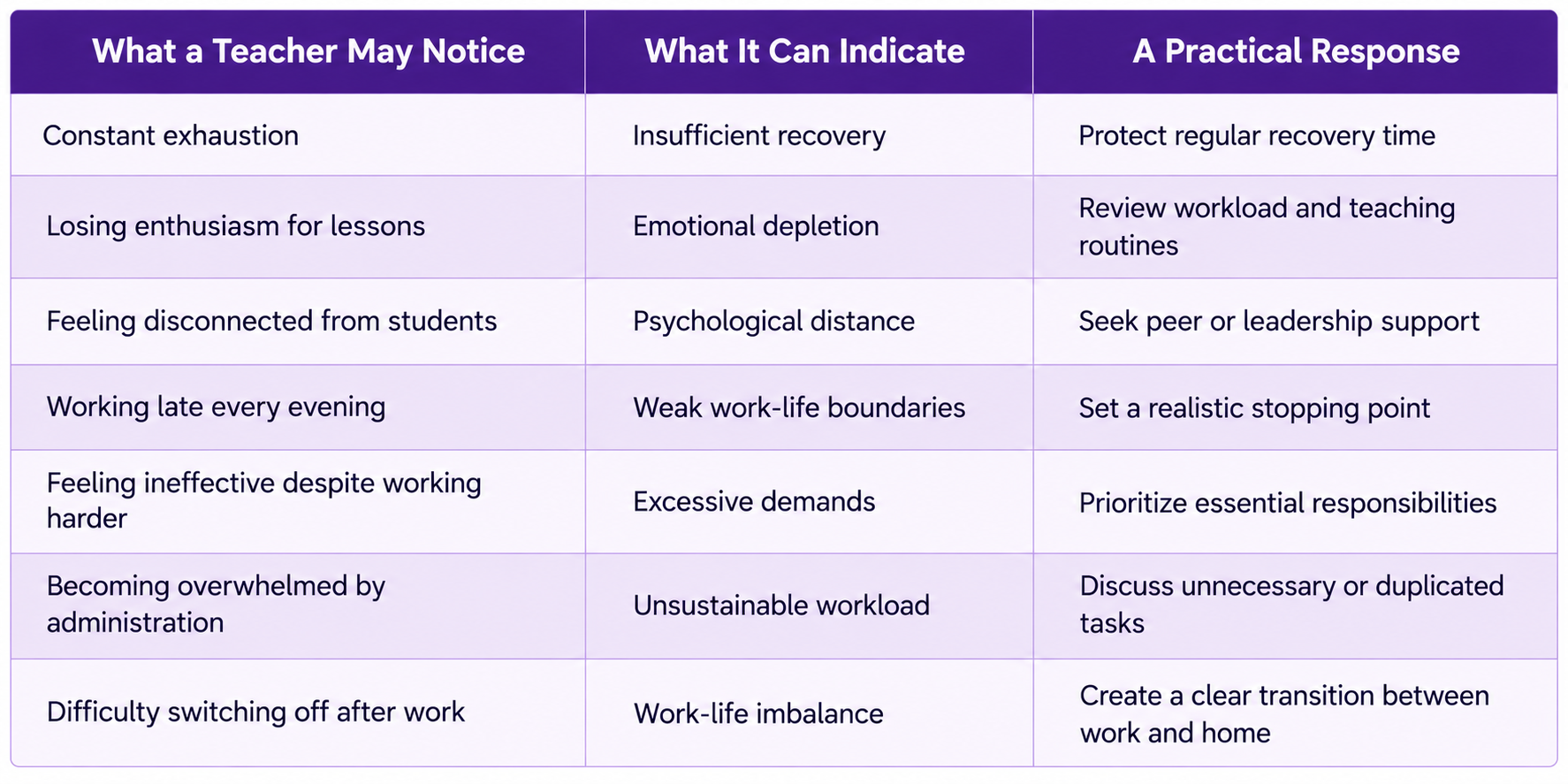
The purpose of recognizing these signs is not to self-diagnose. It is to notice when normal professional pressure may be becoming difficult to sustain.
1. Stop Measuring Workload Only by Teaching Hours
One of the biggest mistakes in discussions about teacher workload is counting only classroom hours.
Teaching continues before and after the bell. Teachers prepare lessons, assess work, communicate with parents, attend meetings, complete documentation and respond to changing student needs.
The research underpinning this article highlights administrative work, assessment, communication, classroom management and other responsibilities as important sources of occupational pressure.
A useful first step is a weekly workload audit.
Write down everything you do for one week and divide it into:
- Essential teaching
- Essential administration
- Useful professional development
- Tasks that could be simplified
- Tasks that could be delegated or reduced
You may discover that the problem is not teaching itself. It may be the accumulation of everything surrounding teaching.
2. Build Sustainable Teaching, Not Perfect Teaching
Teachers often want every lesson to be creative, personalized and completely different.
That sounds admirable. It is also difficult to sustain.
Sustainable teaching means developing methods that allow teachers to remain effective without constantly exhausting their physical and psychological resources. The thesis defines sustainable teaching in terms of maintaining effectiveness, engagement and well-being over time.
This could mean:
- Reusing successful lesson structures
- Creating a personal resource library
- Developing consistent classroom routines
- Sharing teaching materials with colleagues
- Using templates for recurring administrative work
- Planning lessons in batches
- Avoiding unnecessary perfectionism
A lesson does not have to be reinvented every Monday.
Good teaching that can be sustained is better than exceptional teaching that leaves the teacher exhausted.
3. Treat Recovery as Part of the Job
One of the most overlooked elements of teacher well-being is recovery.
Teachers may finish school physically, but their workday can continue mentally. They may think about unfinished marking while eating dinner, answer parent messages late at night or plan tomorrow's lesson before going to sleep.
Over time, there is little space left for psychological recovery.
The research framework behind the thesis specifically identifies recovery and work-life balance as important parts of sustainable professional functioning.
Try creating a simple boundary:
When the working day ends, the professional role pauses.
That might mean turning off work notifications, avoiding routine email after a certain hour or keeping at least one evening completely free from schoolwork.
4. Don't Try to Solve Everything Alone
A teacher who says, “I can handle it myself,” may be demonstrating commitment. But constantly handling everything alone can become a serious risk.
Teacher resilience does not mean enduring endless pressure without support. Rather, it involves the ability to adapt to challenges, recover from difficult experiences, and continue to function effectively and sustainably in a professional role.
That process can feel much easier when teachers have supportive people around them. Having trusted colleagues, friends, family members, or professional contacts to talk to can provide reassurance, practical support, and a sense that they do not have to deal with difficult situations on their own.
A supportive colleague can provide:
- A second perspective on a difficult classroom situation
- Shared teaching resources
- Practical problem-solving
- Emotional support
- Mentoring
- Encouragement during difficult periods
Research reviewed in the thesis identifies collegial relationships, leadership support and professional autonomy as important resources connected with teacher well-being.
5. Make Teacher Self-Care Realistic
The phrase “teacher self-care” can sometimes make well-being feel like another responsibility on an already demanding workload. Teachers do not need complicated wellness routines or additional tasks to protect their well-being. Instead, small, realistic changes—such as taking proper breaks, setting reasonable boundaries, staying connected with supportive colleagues, and making time for activities outside work—can make a meaningful difference.
Start with basic habits that are realistic:
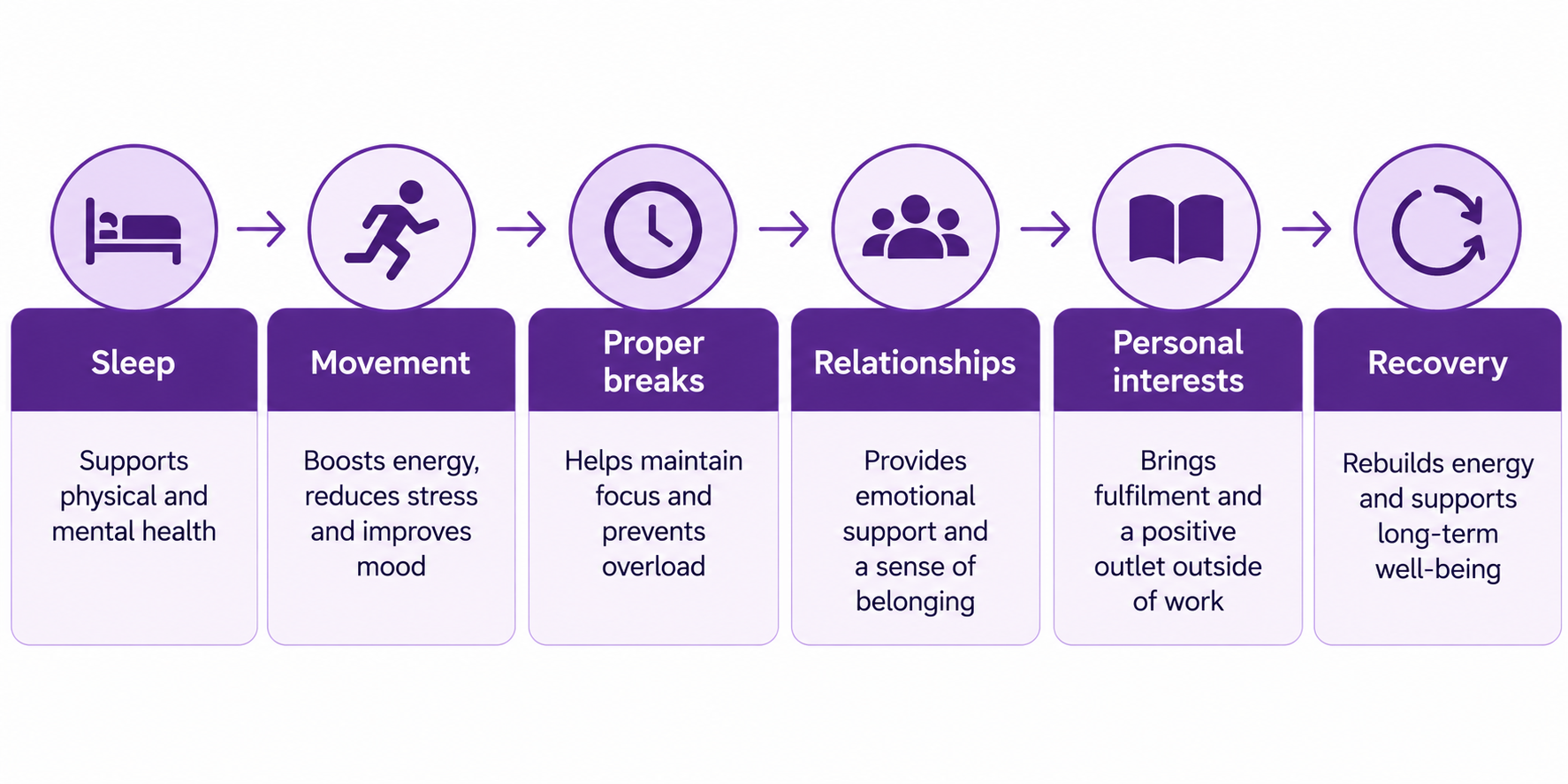
Even small changes matter when they are consistent.
For example, rather than committing to a complicated wellness routine every day, take a proper lunch break without checking school messages. Instead of spending every weekend catching up on work, keep some time aside for family, friends, or things you enjoy.
Stress management for teachers should reduce pressure, not create another performance target.
6. Improve Classroom Routines Classroom management is another important part of teaching burnout.
Teachers spend considerable mental energy when classroom expectations are unclear or routines constantly change.
Simple, predictable systems can reduce this pressure.
Consider establishing consistent routines for:
- Starting lessons
- Submitting assignments
- Asking questions
- Group activities
- Managing transitions
- Handling common behaviour issues
- Ending lessons
The goal is not to make the classroom rigid. It is to reduce the number of decisions a teacher has to make repeatedly.
Less unnecessary decision-making can mean more energy for actual teaching.
7. Remember That Burnout Prevention Is Not Only a Teacher's Responsibility
This may be the most important point.
Schools cannot tell exhausted teachers to “be more resilient” while continuing to increase unnecessary workload.
The research examined in the thesis explicitly argues for an integrated approach in which individual coping is considered alongside organizational conditions. Leadership, workload allocation, communication, autonomy, workplace resources and collegial relationships all influence teachers' professional experiences.
What Can Schools Do?
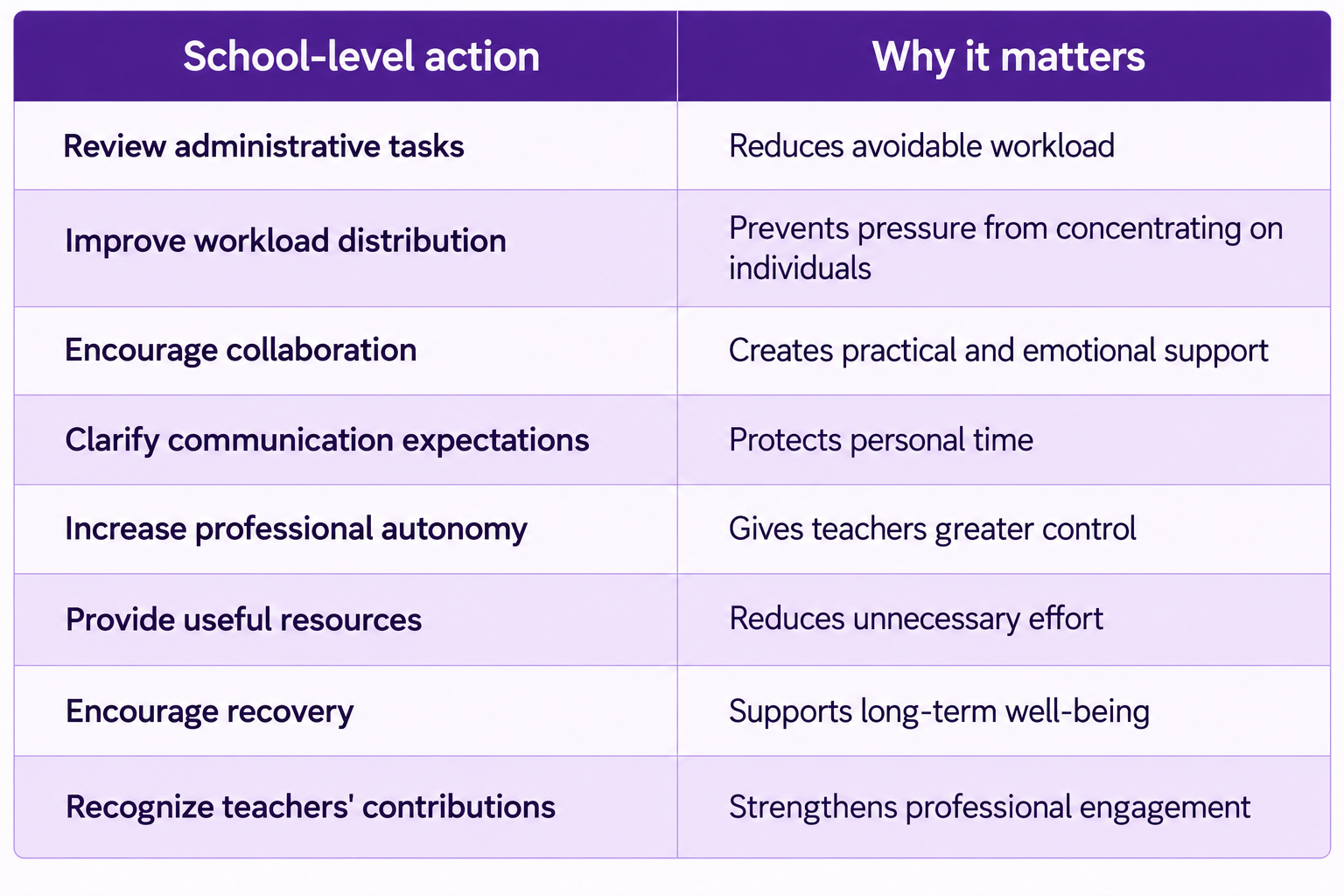
This is where educator well-being becomes an organizational issue rather than simply a personal one.
A Simple 5-Step Burnout Prevention Plan
Teachers looking for an immediate starting point can use this five-step approach:
- Identify: What is causing the most pressure?
- Prioritize: Focus on the responsibilities that genuinely require your time and attention.
- Simplify: Which teaching or administrative processes can become easier?
- Connect: Who can provide practical or professional support?
- Recover: When will you genuinely stop working?
Repeat the process regularly. Sustainable teaching is not created through one major change. It develops through small adjustments that remain workable over time.
The Real Meaning of Sustainable Teaching
The goal of teaching burnout prevention should never be to make teachers better at tolerating unhealthy working conditions.
It should be to create conditions where teachers can do meaningful work without continuously sacrificing their health, relationships and personal lives.
Teachers have a role to play through planning, coping, resilience, boundaries and teacher self-care. Schools have an equally important role through workload management, leadership, resources, autonomy and professional support.
The research on teacher stress and burnout points toward exactly this kind of shared responsibility: professional well-being emerges from the interaction between occupational demands and the personal, social and organizational resources available to teachers.
A sustainable teacher is not the person who can work the longest hours.
It is the teacher who can continue teaching with energy, purpose, professional confidence and enough life outside the classroom to remain well.
That is the real future of sustainable teaching: not asking educators to give more of themselves, but creating better ways for them to teach, recover and remain engaged for the long term.



Comments (0)
No comments yet. Be the first to share your thoughts!
Leave a Reply
Your email address will not be published. Required fields are marked *