






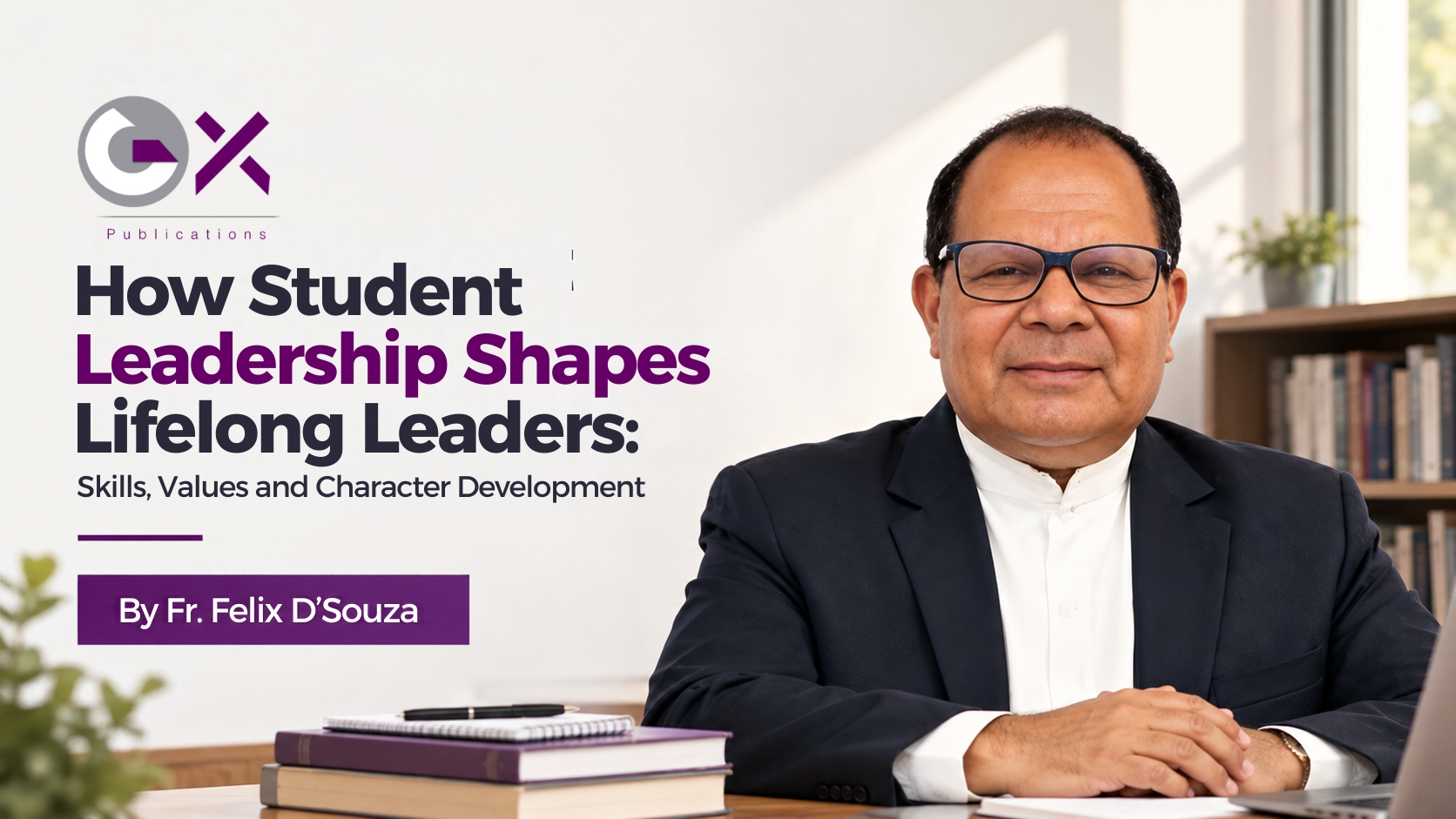
Leadership does not begin with a corporate position, a professional title, or a seat at a boardroom table. It can begin much earlier, in a classroom, on a sports field, during a school assembly, or when a student chooses to take responsibility for others.
This is the central idea explored in Fr. Felix's Thesis, Nurturing Student Leadership: Grooming Lifelong Leaders. The work presents student leadership as a process of formation in which young people learn to lead, serve and excel. It focuses not only on leadership abilities but also on character, responsibility, empathy, service and personal growth.
The result is a broader understanding of student leadership. A student leader is not simply someone who wears a badge or holds an elected position. Leadership is demonstrated through responsible action, positive influence and the ability to help others grow.
What Is Student Leadership?
Student leadership is the process through which students learn to influence, guide, support and serve others within their school or community.
According to Fr. Felix's work, leadership should not be confused with authority. Authority may come from a position, but leadership is earned through trust, example and responsible influence. A School Captain may have an official role, but students are more likely to follow when they feel guided, respected and cared for.
This distinction is important because it changes the purpose of leadership development.
The objective is not simply to produce students who can give instructions. It is to develop young people who can make thoughtful decisions, communicate effectively, work with others and accept responsibility for their actions.
Student Leadership Skills Begin With Everyday Experience
One of the strongest ideas in Fr. Felix's Thesis is that leadership happens in ordinary situations.
A student can demonstrate leadership in many simple ways, such as helping a classmate understand a challenging lesson, encouraging a quieter student to participate in a game, supporting classroom discipline, volunteering for school activities, or assisting others during school events. Although these actions may seem small, they help students build lasting habits of responsibility, cooperation, and service.
This is why student leadership skills are best developed through practice.
Communication Skills
A student leader must be able to explain ideas, listen to others and communicate respectfully.
Communication becomes especially important when students have different opinions. A leader who listens before responding can understand concerns, reduce misunderstandings and build stronger relationships.
The thesis places communication alongside vision, trust and emotional intelligence as important elements of effective leadership.
These communication skills later become useful in higher education, workplaces, community organizations and professional relationships.
Teamwork Skills
Leadership is rarely an individual achievement.
Students learn teamwork skills when they plan activities together, divide responsibilities, solve problems and work toward a common objective. The thesis emphasizes that effective student leaders recognize the strengths of others and create opportunities for their peers to contribute and succeed.
This creates an important shift from "I" to "we."
A student learns that success is not only about personal performance. It can also be measured by whether the team becomes stronger because of their leadership.
Responsibility and Leadership Grow Together
The relationship between responsibility and leadership is one of the strongest themes in the thesis.
That can mean being punctual, completing assigned work, keeping promises, protecting school property, supporting someone who is being treated unfairly and accepting the consequences of one's decisions.
These experiences teach a valuable lesson: leadership is not simply about having influence. It is about being accountable for how that influence is used.
Building Character Is Central to Leadership Development
Leadership skills can help a person organize people and accomplish tasks. Character development determines how those abilities are used.
Fr. Felix's work identifies values such as honesty, respect, empathy, courage, humility and self-control as important foundations of student leadership. It argues that these qualities need to be developed alongside competence because positions eventually end, while character continues with the individual.
This is particularly relevant to leadership education.
A student may become a confident public speaker, but confidence without humility can become self-centeredness. A student may be highly organized, but organization without honesty can be misused. Leadership education therefore needs to connect skills with values.
Leadership Values That Last
Strong leadership values are developed through repeated choices.
A student who admits a mistake learns accountability. A student who gives credit to teammates develops humility. A student who includes someone who feels excluded develops empathy. A student who remains disciplined when nobody is watching develops self-control.
These experiences gradually shape leadership identity.
The thesis describes this process as part of broader human formation, with the goal of developing leaders who embody service, empathy and excellence.
From Student Leader to Lifelong Leader
The connection between student leadership and lifelong leaders becomes clearer when leadership is understood as a habit rather than an event.
A school leadership position may last for one academic year. The qualities developed during that period can continue much longer.
Students who learn to communicate, organize, listen, collaborate, accept responsibility and serve others carry those experiences into later stages of life.
Fr. Felix's Thesis describes this progression through three connected ideas: Leading, Serving and Excelling.
Leading involves providing direction, demonstrating knowledge and setting an example. Serving requires empathy, accountability and concern for others. Excelling involves continuous personal growth while helping others develop their own strengths.
Together, these create a model of purpose-driven leadership.
A Real-World Example From Fr. Felix's Work
The practical value of student leadership becomes clearer through the school experiences documented in the thesis.
At St. Stephen's Academy, Kaffer, the student leadership model gives students structured responsibilities rather than limiting leadership to an investiture ceremony. The documented program includes student responsibilities connected with assemblies, daily duties, peer supervision, teamwork, school activities and service.
The thesis also records student testimonies describing how school leadership experiences helped develop qualities such as discipline, communication, empathy, adaptability, decision-making and confidence. One formerstudent, Adesh Anand, describes how several years of leadership responsibility at St. Stephen's Academy became a foundation for his later professional experience.
This illustrates an importantprinciple behindstudent leadership development: young people learn leadership more deeply when they are given meaningful responsibilities and opportunities to reflect on their experiences.
The Role of Teachers and Mentors
Students do not develop leadership in isolation.
Teachers, mentors and leadership animators play an important role by creating opportunities for students to take responsibility, make decisions and learn from mistakes.
The thesis describes the educational process as a way of nurturing leadership from a young age. It specifically emphasizes practical guidance, real-life examples and supportive environments that help students develop their abilities.
A good mentor does not simply tell students how to lead. They create situations where students can practice leadership.
That may involve organizing an event, resolving a disagreement, supporting a peer, leading a team activity or taking responsibility for a community project.
Situational Leadership and Adaptability
Not every leadership challenge is the same.
A student dealing with a team disagreement may need to listen carefully and mediate. A student organizing an event may need planning and delegation skills. A student responding to a crisis may need courage, calmness and quick decision-making.
This is why adaptable leadership matters.
The thesis emphasizes critical thinking, informed decision-making, collaboration, adaptability, integrity, accountability and social responsibility as important areas of student leadership development.
These capabilities help students understand that leadership is not about using one style in every situation.
How Students Can Develop Leadership Today
Students do not need to wait for an official leadership position.
They can begin by:
- Taking responsibility for small tasks.
- Listening carefully before responding.
- Helping classmates without expecting recognition.
- Giving credit to others.
- Learning from mistakes instead of hiding them.
- Practicing clear and respectful communication.
- Participating in teamwork and community activities.
- Including students who may feel overlooked.
- Reflecting on what worked and what could be improved.
- Connecting leadership with service rather than status.
These small actions turn leadership from an abstract idea into a daily practice.
Conclusion: Leadership Is Formed Over Time
The central lesson of Fr. Felix's Thesis is that leadership should be nurtured, practiced and reflected upon from an early age.
Student leadership is therefore much more than a school position. It can become a foundation for character development, communication skills, teamwork skills, responsibility and leadership, and purpose-driven action.
The strongest student leaders are not necessarily those who speak the loudest or hold the most visible positions. They are students who learn to combine knowledge with example, responsibility with service, and personal excellence with the growth of others.
When schools create meaningful opportunities for young people to lead, serve and reflect, they are not simply preparing students for the next academic stage. They are helping develop future leaders whose skills, values and character can continue to influence their families, professions and communities long after their school years have ended.
As the thesis puts it, the essence of student leadership is the willingness to take responsibility, the courage to serve and the consistency to live by values.



Comments (0)
No comments yet. Be the first to share your thoughts!
Leave a Reply
Your email address will not be published. Required fields are marked *