






Introduction
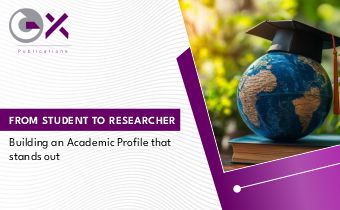
Transitioning from student to successful researcher is a lifelong process that involves continuous learning and hard work along with personal growth. Although earning a degree is a significant accomplishment, it is really just the beginning of a much longer academic and professional journey.Students are expected to accomplish much more than just get great grades in the fiercely competitive academic atmosphere. Universities, also other research institutions and many granting foundations as well as employers want people who are original thinkers and researchers who show leadership capacity in their field, who have the potential to get grants and publish..
A perfect academic profile isn’t just about qualifications anymore, it is a record of your research interests, publications, professional activities, presentations( in and out of conferences ), collaborations, teaching experience and the like. It takes time, strategy and steady actions to build such a profile – but the awards are immense. Having a solid academic history can pave the way to higher education opportunities and research positions, create credibility within your area of specialization and offer you an edge in a highly competitive global marketplace.
Start creating your profile early
Many students believe that building an academic profile starts after completing a master’s degree or enrolling in a doctoral programme. The process actually starts much earlier. Undergraduate and post graduate years provide valuable opportunities to explore research, develop technical skills, and build relationship with mentors.
Being involved with research through departmental projects, assisting faculty members on their research agendas, taking seminar courses or joining a department-related club are all good ways to get your feet wet in the world of research. Regular scrutiny of the literature familiarizes students with knowledge creation and knowledge communication in academia. Students gain confidence from these early encounters and are able to take on progressively challenging research tasks. Students need to begin thinking of every academic activity as a stepping stone, rather than waiting until after graduation before considering their future professional identity.
Research skills are the key to success
Research is a paramount component of all academic careers. Students with strong research skills are better equipped to pose significant questions, collect and analyze data in a methodical manner, analyze evidence carefully, and provide well-reasoned conclusions.
As a pre-requisite for more advanced research designs, good researchers conduct literature reviews, find gaps in the research, select suitable methods, gather reliable data and draw objective conclusions. You also need to be aware of research ethics including honesty, transparency and citation practices
In addition to raising their grades, research experience boosts their confidence when they apply for PhD programs, research grants, and scholarships.These skills are also valuable to employers in several different fields as they show analytical thinking and problem solving abilities.
Publishing your Research creates Lasting ability
Publishing is one of the best ways to introduce yourself into the academic scene. Having a Published article, conference papers , book chapter or thesis shows that your work is not only meaningful to you and your instructor but this also enables other researchers to read, review and extend your work.
Most great researchers publish their first paper while still in post-graduation. Publishing earlier in your career develops academic writing skills that will help showcase your abilities at targeted audiences, high credentials (Publications) Consequently in turn increases one’s confidence and also aids you by providing a more accurate account of events that will be useful for future papers, research posts, and fellows.
The more critical point, however, is that publications preserve a permanent academic record about your work. Your work emerges from anonymity the more often people begin to cite it, which means that your academic prestige and influences increases both at home and abroad.
Conferences Expand knowledge and Professional networks
Displaying research results at a conference provide important things that an opportunity to disseminate findings. Conferences expose students to latest emerging research areas , innovative methodologies as well as seasoned scholars working on similar topics.
Interacting with researchers from different universities and countries encourages collaboration and provides valuable feedback that can improve ongoing research. Delivering a presentation at a conference is also a timely moment to practice communication and public speaking skills , that are very important for any professional in academia.
Attending academic conferences is a terrific method to network, and we know that it frequently leads to collaborative publications, research partnerships, advisor positions, or invitations to future initiatives.
Build a Professional Academic presence
In this era of digital ubiquity, an academic identity online is nearly as significant as traditional artefacts of publication. Academics are frequently found on professional networking sites as well as university and other institutional websites.
Having profiles on platforms such as Google Scholar, ORCID, ResearchGate and LinkedIn helps your research to be recognized by more people. Updating these profiles with publications, conference representations, awards and research interests increases your visibility as a professional.
Keeping your academic profile tidy shows professionalism and helps people who collaborate with you, who want to employ you or ongoing funding agencies assess your level of expertise.
Develop skills Beyond Research
Research excellence is necessary but not sufficient, contemporary researchers need a suite of complementary skills. Skill sets including verbal communication, teamwork, leadership, project management, digital literacy, or critical thinking are becoming more and more valued in both academics and business. By explaining teaching experience, mentoring of junior students, service activities in organisation of academic events and community outreach projects, these applicants also show leadership and commitment beyond research.
Learning a software/ tool for data analysis, scientific writing, programming and data visualisation can also substantially boost an academic profile in multi-disciplinary areas.
Collaboration drives Academic growth
Modern research is rarely conducted in isolation. The majority of the world's ground-breaking discoveries are only made possible via interdisciplinary research.
Collaborative projects set up students to work with new ideas, principles and researches. Because they broaden professional networks and raise awareness of research among international academic groups, international collaborations can be very advantageous.
In addition, collaborations builds interpersonal skills like communication, adaptability and shared-problem solving and that will prove tremendously helpful in the long haul of your professional life.
Maintain Integrity and commit to Lifelong learning
An extraordinary academic profile is a combination of achievements and morals. Maintaining credibility in this way requires ethical research practices, proper citation of scholarly work , respect for intellectual property and transparent reporting of findings.
Meanwhile researchers need to realise that learning is a process. Because there is continuous development of scientific knowledge be sure to keep up with technologies, methods to research, and developments in your own field or discipline.
Workshops, professional certifications, mastering new analytical capabilities, and a familiarity with the latest academic literature keeps your skills fresh across the entirety of your career.
Conclusion
Having a profile that stands out academically is not one task; it is just most probably a whole new approach you live by. It demands you to have great curiosity, discipline , persistence and a desire to learn. Every research project you finish , every paper you publish, every conference you visit and talk at every collaboration that enriches your profile contributes to shaping who you are as a professional.
Scholarships, doctoral admissions , funding for research , an academic position and a leadership role are more likely to go to students who develop their academic profile in advance. More importantly they start to contribute to the augmentation of knowledge instead of being passive recipients of education.
There is no degree that makes you a researcher, instead it is the transition from student to innovator and then from innovator to critical problem solver. Aspiring researchers create a profile to support their future careers and the advancement of knowledge which should stand out and most importantly have an impact on the discipline and society by being proficient in research skills , work published , collaborations made (professional networking) if necessary while ensuring that academic integrity is upheld.



Comments (0)
No comments yet. Be the first to share your thoughts!
Leave a Reply
Your email address will not be published. Required fields are marked *