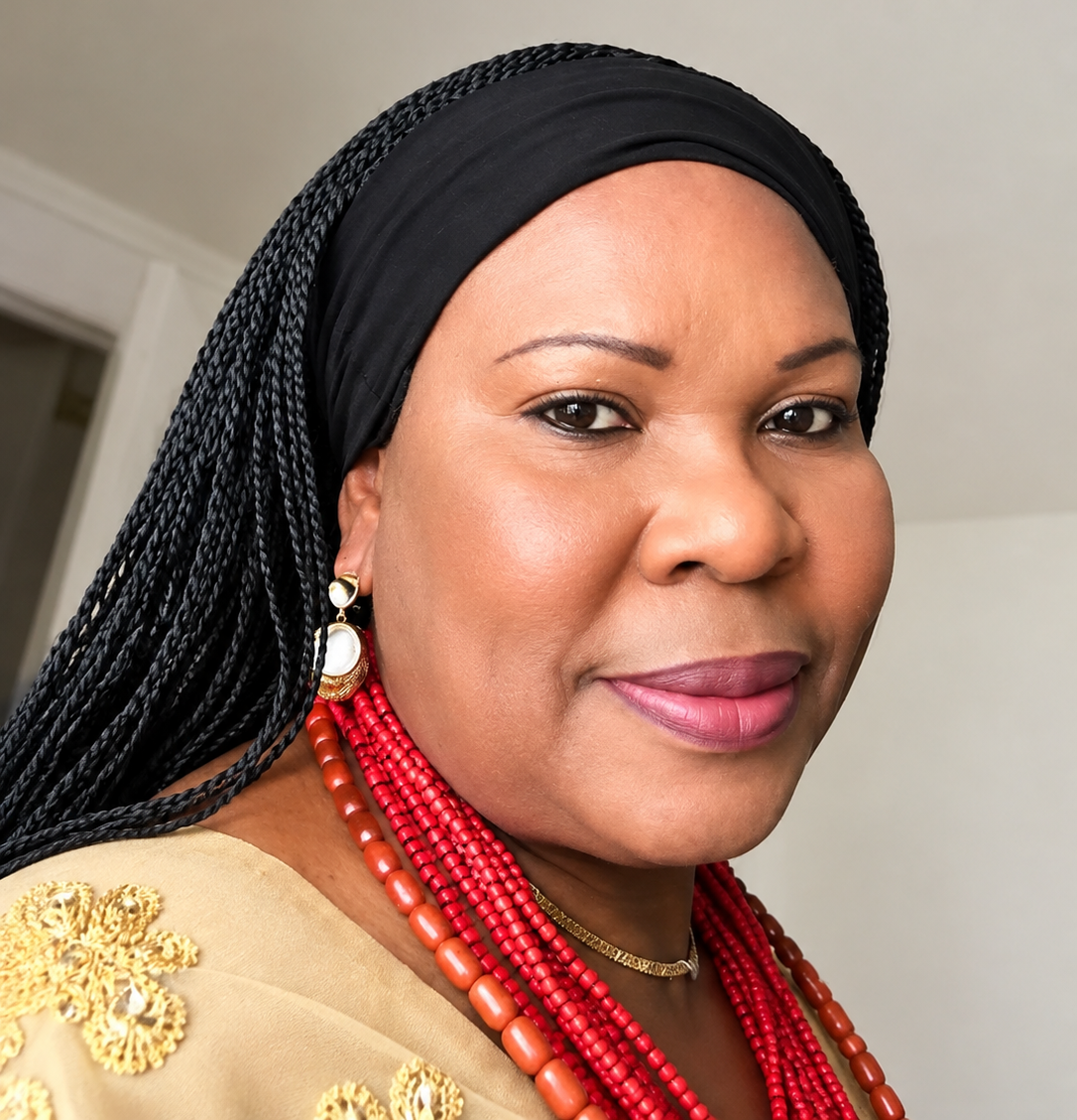

Dr. Princess Victoria G. Isaac's professional journey is a story of continuous learning, transformation, and service. Her career has developed across healthcare, nutrition, early childhood development, teaching, science education, educational leadership, and doctoral research. At the heart of this journey is a simple but powerful belief: education should create opportunities for every learner, regardless of ability, background, or circumstance.
Her story did not begin in a classroom. It began with an interest in people, health, nutrition, and development.
Princess Victoria's first degree was in Home Economics, providing her with an early foundation in understanding individuals, families, wellbeing, practical life skills, and the relationship between knowledge and everyday living.
Her academic journey then progressed into a second degree combining Nutrition with Biology and Combined Science. This transition was significant because it brought together two areas that would continue to influence her professional life: the wellbeing of people and the scientific understanding behind it.
Healthcare Experience: Before becoming an established educator, she worked as a dietitian at King's College Hospital, while also completing a placement at St Mary's Hospital. Her early professional experience in healthcare exposed her to the importance of individual needs, development, communication, and evidence-based practice.
These experiences would later become valuable foundations for her approach to education. She learned early that people do not all learn, develop, or respond in the same way. The experience of working with individuals in a healthcare environment helped shape a perspective that would eventually become central to her educational philosophy: support must be adapted to the individual rather than expecting every individual to fit the same system.
One of the defining dimensions of Princess Victoria's story is that her educational development took place alongside the responsibilities of being a full-time mother.
Rather than viewing motherhood as a pause in her intellectual and professional development, she continued building her qualifications and knowledge over time.
For Princess Victoria, education remained a continuous part of that journey.
Her transition into education brought together her previous experiences in nutrition, biology, science, and human development.
She completed her PGCE, moving formally into teaching, and later undertook master's-level study focused on Physics, Biology, and Chemistry.
Multidisciplinary Foundation: Rather than limiting herself to a single scientific discipline, she developed expertise across Biology, Physics, and Chemistry and eventually taught science across secondary, further education, and A-Level settings.
Her CV records approximately 20 years of teaching and educational leadership experience, including work across Biology, Physics, and Chemistry, and a sustained focus on inclusive science education.
Princess Victoria's commitment to children and education also extended beyond formal school teaching. She established a day-care and learning centre, creating an environment where children could be supported from their early years.
This experience reinforced her belief that educational outcomes are influenced long before a student reaches an examination classroom. Early confidence, language development, family support, foundational knowledge, and positive relationships with learning can all influence a child's later educational journey.
As her teaching career developed, Princess Victoria moved into increasingly senior roles. She worked across a number of London schools, teaching science and taking responsibility for curriculum development, assessment, inclusion, and educational leadership.
Schools: St Michael and All Angels Academy, Harris Academy Bermondsey, Evelyn Grace Academy, Kingsdale Foundation School, Eden Park High School, Plumstead Manor School, Riddlesdown Collegiate, and other teaching and supply positions.
Key Achievement: At Evelyn Grace Academy, she coordinated BTEC Science and served as a Lead Internal Verifier and Senior Verifier, with responsibility for assessment standardisation and verification. Her CV records a major improvement in Science GCSE pass rates during her tenure.
The question of inclusion eventually became central to Princess Victoria's professional identity.
Her experience working with diverse learners led her to examine a deeper issue:
If science is intended to be available to everyone, why do some students continue to experience barriers to accessing it?
This question became the foundation of her doctoral research.
"Improving Outcomes for Students with Disabilities in Science Education: A Critical Review of the British Secondary School Curriculum and Recommendations for Reform."
The research examined why students with disabilities remain underserved and underachieve in science despite decades of inclusive education policy.
The research also highlighted the importance of adaptive resources, collaboration, and systemic design rather than attributing educational difficulties simply to student ability.
Princess Victoria's doctorate represents the natural continuation of her professional journey. She did not approach inclusion purely as an academic concept. She approached it from years of direct experience in classrooms.
She had:
1. Embedding Universal Design for Learning (UDL)
Within schemes of work
2. Training Science Teachers & SEND Specialists
To collaboratively design practical science
3. Creating National Repositories
Of inclusive science resources
4. Measuring Success Broadly
Engagement, self-efficacy, and science identity beyond examination grades
This represents an important evolution in her career: The teacher became a researcher, and the researcher became an advocate for systemic educational change.
Princess Victoria's work has increasingly extended beyond her own classroom.
She has founded the Science for All Network, a community intended to share inclusive resources and practices among educators and researchers across the UK, Europe, and Africa.
Her CV records mentoring more than 50 trainee and early-career teachers, many of whom have progressed into leadership roles in inclusive education.
She has also participated in conferences, contributed to policy briefings, and shared her doctoral findings through teacher-development programmes.
Multi-Level Impact: Her work operates at several levels—the child, the classroom, the teacher, the school, and the wider education system.
Across the different stages of her life, a consistent pattern emerges:
This makes her professional story more than a conventional teaching career. It is a journey from care to education, from education to leadership, and from leadership to research and advocacy.
Princess Victoria's emergence as an author is therefore a natural next chapter. Her potential contribution to educational literature comes from the combination of lived experience, professional practice, academic research, and leadership.
She has experienced education from multiple perspectives:
This breadth gives her writing a distinctive foundation. She can write not simply about what inclusive education should look like, but about what happens when educational systems attempt to implement it in real classrooms.
The strongest authorial identity for Princess Victoria is not simply that of a "science education expert." It is the voice of an educator asking a larger question:
How can we build an education system in which every learner is genuinely able to participate, belong, and succeed?
Her writing can bring together academic evidence and practical classroom experience. It can speak to:
Her experience with Biology, Physics, and Chemistry also gives her the opportunity to communicate science education in an accessible way while maintaining academic credibility.
Princess Victoria's journey is particularly powerful because it was built while navigating the responsibilities of family, motherhood, professional development, and education.
Her story demonstrates that academic and professional achievement does not always follow a conventional timeline. It can evolve through different chapters of life.
Her journey is therefore not simply about the qualifications she has accumulated. It is about what she has continued to build with each stage of her life.
Today, Princess Victoria stands at the intersection of science education, inclusive practice, research, and educational leadership.
Her professional profile records extensive experience in curriculum leadership, assessment, teacher development, and inclusive education, alongside doctoral research into curriculum access for learners with disabilities.
Her next chapter as an author can transform this accumulated experience into knowledge that reaches beyond the institutions in which she has worked.
Science should not belong only to those who find the system easy to navigate. Science belongs to every learner.
Princess Victoria G. Isaac's journey—from Home Economics, to nutrition and healthcare, through motherhood and early-years education, into science teaching, educational leadership, and doctoral research—is ultimately a story about expanding the meaning of education.
It is a story of continuing to learn while teaching others. And it is a story of turning professional experience into a wider purpose: to make education more inclusive, science more accessible, and opportunity more equitable for every child.