






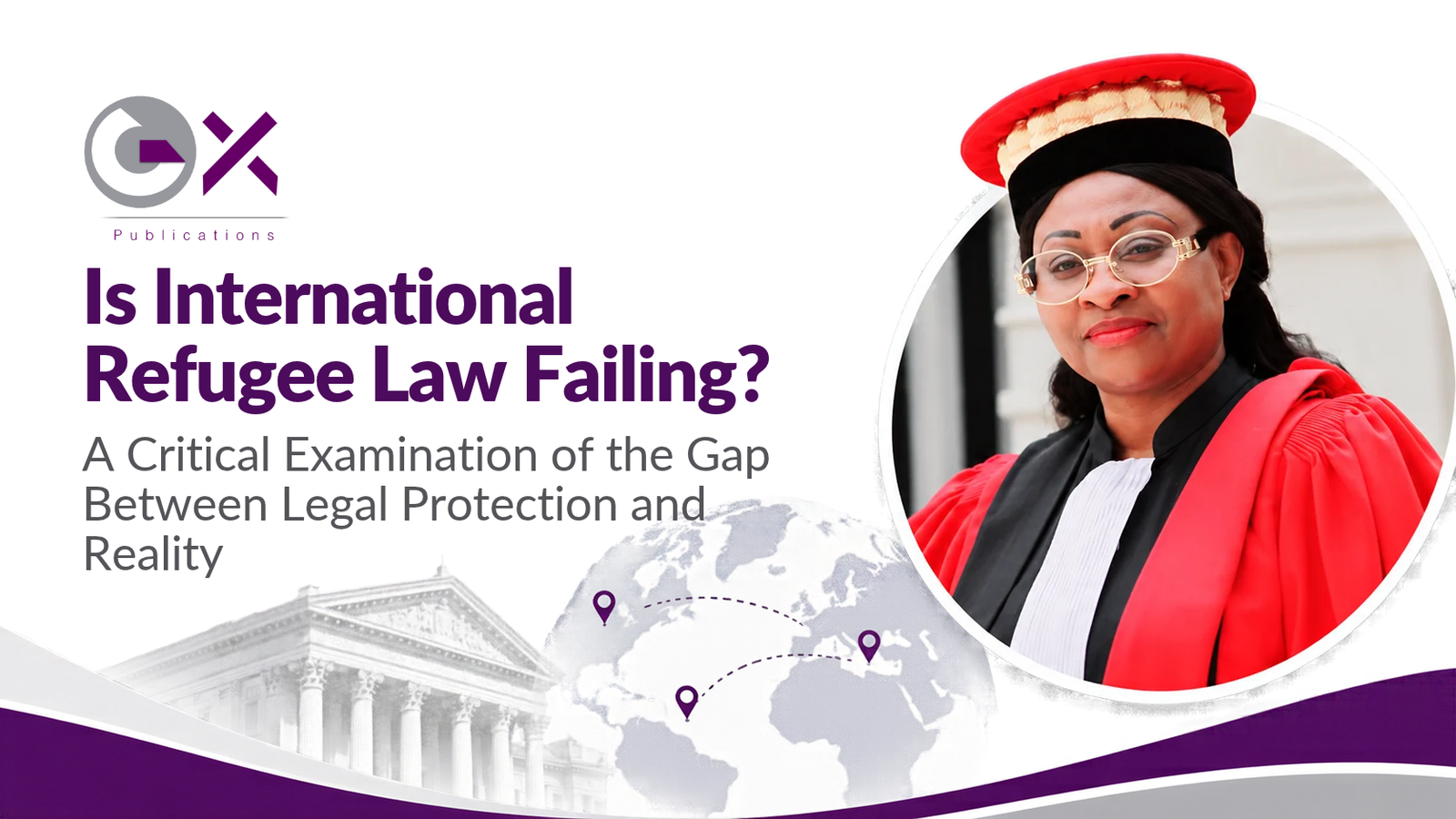
International refugee law was established to protect people forced to leave their homes because of persecution, armed conflict, violence and serious human rights violations. It provides a legal framework that defines refugee rights and establishes responsibilities for countries receiving displaced populations. However, despite these international commitments, millions of people continue to face difficulties when seeking safety and protection.
This raises an important question: is international refugee law failing to protect the people who need it most?
The main concern is not necessarily the absence of international laws. It is the growing gap between the legal protection promised by these frameworks and the reality experienced by refugees and asylum seekers.
Understanding International Refugee Law
The 1951 Convention Relating to the Status of Refugees and its 1967 Protocol form the foundation of modern international refugee protection. These instruments establish the rights of refugees and the responsibilities of states towards people seeking international protection.
One of the most important principles is non-refoulement. This principle prohibits states from returning refugees to territories where their lives or freedom would be threatened for reasons covered by the Convention.
International refugee law also addresses important areas such as access to education, employment, housing, legal assistance and freedom of religion. These protections aim to ensure that refugees are treated with dignity and are given an opportunity to rebuild their lives.
However, the existence of legal rights does not always guarantee their effective implementation. In many situations, refugees and asylum seekers continue to experience administrative delays, discrimination, restricted access to services and uncertainty about their legal status.
The Gap Between Legal Protection and Reality
One of the major challenges in international refugee protection is the difference between what international law requires and what countries actually implement.
Asylum seekers may wait for long periods before receiving decisions on their applications. Some face difficulties accessing legal assistance, accommodation, healthcare and employment. Others experience detention, border restrictions or policies that make it difficult to access asylum procedures.
Political interests and national security concerns can also influence refugee policies. Governments may introduce stricter migration controls, while humanitarian responsibilities require them to respect international protection standards.
Another important concern is the treatment of refugees within host communities. Xenophobia, discrimination and social exclusion can make integration difficult. Even after receiving legal protection, refugees may struggle to find employment, secure housing and participate in society.
These challenges demonstrate that refugee protection must be evaluated through both legal standards and their practical application.
European Union and Sub-Saharan Africa: A Comparative Perspective
The European Union and Sub-Saharan Africa provide two important regional contexts for understanding the challenges of international refugee protection.
In the European Union, the Common European Asylum System aims to establish common standards for asylum procedures and refugee protection. Its purpose is to create a more coordinated approach among member states. However, differences in national legislation, administrative capacity, political priorities and the availability of resources can affect the implementation of these standards.
Sub-Saharan Africa has its own regional framework through the 1969 OAU Convention Governing the Specific Aspects of Refugee Problems in Africa. This agreement complements the 1951 Refugee Convention and provides a broader definition of a refugee. It recognises people who are compelled to leave their countries because of external aggression, occupation, foreign domination or events seriously disturbing public order.
Despite these legal frameworks, both regions face practical difficulties. Conflict, economic pressure, institutional limitations, social tensions and challenges in coordinating national policies can affect the protection available to displaced people.
A comparison of these regions is important because it helps identify differences in legal approaches, implementation practices and institutional responsibilities. It also creates opportunities to understand which practices can improve refugee protection.
The subject of international refugee protection is also examined in the doctoral research of Prof. Nadesh Ayafor Katsa, titled “The Comparative Analysis of International Protection Mechanisms for Refugees and Asylum Seekers in the European Union and Sub-Saharan Africa under Public International Law.”
Her research focuses on the legal and institutional mechanisms used to protect refugees and asylum seekers in these two regions. It examines the differences between international protection standards and their implementation, with particular attention to the responsibilities of states under Public International Law.
An important part of Dr. Katsa’s research is the comparative examination of the European Union and African regional protection systems. The study considers the 1951 Refugee Convention, the African regional framework, national legal provisions and the role of international organisations, government institutions and non-governmental organisations.
Her professional experience working with refugee and asylum cases in France also provides an important practical perspective to the subject. This experience informs her interest in understanding how legal protections operate beyond formal legislation and how institutional and social conditions influence the treatment of displaced people.
The research proposes a qualitative approach supported by legal analysis, documentary research, interviews and other relevant sources. Its objectives include identifying the strengths and weaknesses of the two regional systems, examining their effectiveness and developing recommendations for stronger legal and policy cooperation.
Through this comparative approach, Dr. Katsa's doctoral work brings attention to an important question in contemporary international law: how can states ensure that the rights recognised in international agreements are genuinely protected in practice?
Why Is International Refugee Protection Falling Short?
Several factors contribute to the continuing challenges in refugee protection.
- Inconsistent implementation of laws: Countries may interpret and apply international obligations differently, creating unequal levels of protection.
- Political and security priorities: Migration control and national security policies can sometimes conflict with humanitarian responsibilities.
- Limited institutional resources: A shortage of funding, trained personnel, accommodation and legal support can weaken asylum systems.
- Discrimination and xenophobia: Negative attitudes towards displaced populations can restrict access to employment, education, housing and social participation.
- Weak accountability: When states fail to meet their legal responsibilities, refugees may face difficulties obtaining effective remedies and challenging violations of their rights.
Addressing these challenges requires stronger institutions, fair asylum procedures and greater cooperation between countries and regional organisations.
Can International Refugee Law Be Strengthened?
International refugeelaw remains an essential part of the global human rights framework. However, its effectiveness depends on the commitment of states to implement their legal responsibilities.
Governments need to strengthen asylum procedures, improve access to legal assistance and ensure that refugees are not returned to places where they face serious threats. Regional organisations should also encourage cooperation, share effective practices and support countries facing significant displacement challenges.
The comparative approach presented in Dr. AYAFOR Nadesh’s doctoral research highlights the importance of examining both the European and African protection systems. Understanding their strengths, weaknesses and implementation challenges can contribute to more effective legal and policy responses.
Conclusion
International refugee law has established important protections for people forced to leave their homes. However, the continuing challenges faced by refugees and asylum seekers demonstrate that legal recognition alone is not enough.
The real test of international refugee protection lies in its implementation. Laws must translate into fair asylum procedures, safety, dignity and access to essential rights.
Through her doctoral research, Dr. AYAFOR Nadesh examines the differences between legal commitments and practical protection in the European Union and Sub-Saharan Africa. Her comparative study highlights the importance of stronger institutions, regional cooperation and effective implementation of international legal standards.
Ultimately, international refugee law should not be judged only by the agreements states sign. Its success must also be measured by whether refugees and asylum seekers receive the protection, dignity and security that these agreements promise.




Comments (0)
No comments yet. Be the first to share your thoughts!
Leave a Reply
Your email address will not be published. Required fields are marked *