



Your voice decides what gets published.
GlobalX Publications connects academic voices worldwide through credible publishing, expert insights, and global research visibility.
GlobalX Publications
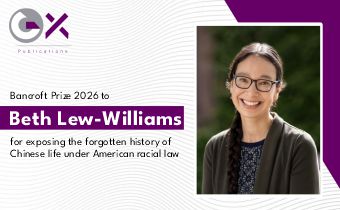
Beth Lew-Williams receives the 2026 Bancroft Prize for her groundbreaking book John Doe Chinaman, uncovering the forgotten history of Chinese immigrants under American racial law.
THE HONOR OF HISTORY WRITING
Academic historians worldwide are celebrating an unprecedented achievement as historian Beth Lew- Williams has been honoured with the 2026 Bancroft prize in American history and diplomacy – one of the most fanfare- filled prizes awarded to Professional historical scholarship. The award is awarded by the Columbia university, and celebrates her as a winner for her pioneering book John doe Chinaman: A Forgotten history of Chinese life under American Racial Law. The award recognizes her distinguished career in continuing to unearth lost volumes of American story, and reintroducing voices that have languished on the margins of history.
Unearthing a Forgotten Chapter of American History
John Doe Chinaman is Lew Williams exploration of the lives lived by those chinese persons caught in a thicket of discriminatory laws in nineteenth century America. John Doe Chinaman was the term used in legal and official documentation where no individual Chinese person wanted to be named, robbing whole lives of their specificity. By piecing together these forgotten lives through archival research, the author is able to uncover how deeply race-based injustice permeated legal institutions and daily life.
The scope of American Racial law
The book shows how anti-chinese discrimination in the US went much farther than then federal Chinese Exclusion Act. Surrounded, in short, by thousands of local and state laws that determined employment opportunities and property rights, educational access, family relationships and social life for Chinese immigrants. Lew- Williams goes on to expose those barriers, so that readers will better understand how these racial laws targeted immigrant communities for systematic vilification and control in the making of America.
An Historic Contribution to the Literature
This examination has been referred to as a “vital re-examination” by the Bancroft Prize Committee in connection with its underlying assumption. Academicians have found this work to be intellectually and humanely vigorous because it returns power and identity to those who have been marginalized by the dominant narratives in history. This book offers a critique of the conventional assumptions of American history with respect to the race, immigration and citizenship issues.
Inspiring future Generations of Researchers
Beth Lew- Williams have accomplished around the world inspires historians, researchers and students as well. Her work exemplifies how archival research can change mainstream narratives but also why some histories deserved a second-look. By reclaiming stories lost in court records and overlooked papers she has effectively pushed the limits of historical research, setting an example for other historians to dig deeper for voices left unheard.
Celebrating an enduring legacy
For John Doe Chinaman: A forgotten history of Chinese life Under American racial law wins the Bancroft prize of 2026, not only does it gain recognition for its quality, but it becomes a form of administered history, justice and memory. As the world cheers for Beth Lew -Williams in her great accomplishment, the book reminds us that history cannot be written in absence of voices that were muted by history. Through her scholarship, she has ensured that these muted voices remain a window to history, migration, race, and equality into the future.
Congratulations to the Distinguished Historian
Congratulations to the recipient of this prize, Professor Beth Lew-Williams! who has made a valuable contribution to the history of American social and legal development through your historical research and support of marginalized perspectives. This prize is awarded for his scholarly work and search for the truth in history, which is crucial to any correct recounting.
Congratulations to professor Beth Lew- Williams for this incredible honor and one that will last long in The future of American history and diplomacy.