







With the high competitive world of academics today, the degree and research skills are not sufficient. There is an increasing culture of assessing scholars not just on their visibility, but also on their impact on knowledge and their reputation. The culture of assessing scholars is changing focus to include their visibility as well as their contribution to knowledge and their professional standing, all of which are increasingly being focused on by universities, research institutions, funding agencies and industry recruiters. That's when it's time to take advantage of publishing, which is one of the most effective tools you can have for long-term success.
For researchers, scholars, PhD candidates and faculty members, publication is not a one-to-one correlation of lines to their CV. It's about asserting authority, joining in on scholarly conversation and building an academic profile. You use your publication history in many ways – for securing research grants, getting promoted, working with colleagues around the world, or becoming a thought leader in your field.
There is a lot more to developing a strong academic profile by publishing than just submitting papers willy-nilly. It requires a consistent academic publishing approach, strategy and knowledge of modern academic publishing in the digital world.
This article examines some of the practice- and experience-based strategies to enhance your academic identity by publishing. You will be able to gain insight into ways to enhance research visibility, build academic credibility, establish (or strengthen) your academic leverage and grow your academic career over time.
Academic Publishing: why more than ever?
The world of academic publishing has changed significantly in the past 10 years. Up until now, there were very few publications that were available except in print journals found in University Libraries. Research today is easily searchable around the world within seconds via Google Scholar, Scopus, ResearchGate and the institutional repository.
This shift has changed the nature of the scholarly battle to a competition not only among scholars in their university departments, but among university departments as well. They do not live in isolation, but are trying to gain recognition on a worldwide stage.
Every good publication record is valuable to:
- Higher citation potential
- Better research collaborations
- Greater opportunities to receive grants and funding opportunities
- Conference and peer review invitations are sent out.
- Enhanced opportunities for faculty promotions
- Enhanced professional recognition
First and foremost a publication serves to create academic credibility. If your research is published in reputable journals, in edited volumes and conference proceedings, it implies that your research is subject to peer review and adds value to the field of your research.
In many universities around the world, the number of publications is now directly related to the criteria used to decide on tenure, to faculty appraisals and ranking of universities. So, it is crucial to put together an academic profile but it is not a luxury item.
Implement a clear Academic Publishing Strategy clear about what you want to publish and how
Many of the early career researchers' most common errors are in publishing without direction. Unrelated publications in any journals will lead to more publications but not to enhance the identity of the scholars.
The first step to an effective academic publishing strategy is to be clear.
Ask yourself:
- What are the areas of research that I wish to pursue, and to be known for?
- What are the journals that are accepted in my field?
- What is the purpose of this presentation?
- What magazine, journal or book would I like to read if I was a journalist?
Good students will typically develop a niche. For instance, if a researcher's research interests are in sustainable tourism, then he or she might always publish on topics such as “Eco-tourism policies”, “Climate-sensitive tourism” and “Sustainability in the hospitality industry” without interchanging his or her work to unrelated topics.
The authority slowly grows over the course of this theming.
In addition, a focused strategy can benefit in researcher brand building. As time goes on, peers start to think of your name when it comes to certain disciplines. This acknowledgment can prove to be irreplaceable for networking, co-operation and academic chances.
The road to publishing must not be based on quality alone; it is necessary to also publish quality research.
The pressure to produce a high rate of publications is increasing in academia. But well-known scientists know that it is not quantity of poor papers that makes a difference but quality publications.
Sometimes one well-cited article in a good quality journal can be more beneficial to your profile than many low impact articles.
When publishing research papers, try to hire the following:
Relevance
Pick topical issues, problems or practical issues in your area of study that are discussed, debated and/or unmet.
Originality
Editors and reviewers appreciate originality, new or novel approaches, and new insights.
Methodological Strength
One of the most common reasons for a paper to be rejected is due to weak methodology. Be sure to have a thorough research design, sampling and analysis.
Clarity
Poorly-written research may not be successful even if it is excellent. Academic writing should be concise, well-organized and coherent.
Often a good researcher will work for months before writing a good manuscript and then submit it. This attention to detail helps to boost Acceptance Rates and citations in the long-term.
Carefully choose the right journal
Choices of journal are very critical as they influence research visibility and reputation.
It can be better to have it published in a reputable journal, than in a predatory one or in a low quality journal.
Prior to submission of your manuscript, consider:
- Journal indexing status
- Peer-review process
- Editorial board quality
- Citation metrics
- Publication ethics
- Audience relevance
Good indexing databases like Scopus, Web of Science or PubMed will generally suggest higher standards in the journals.
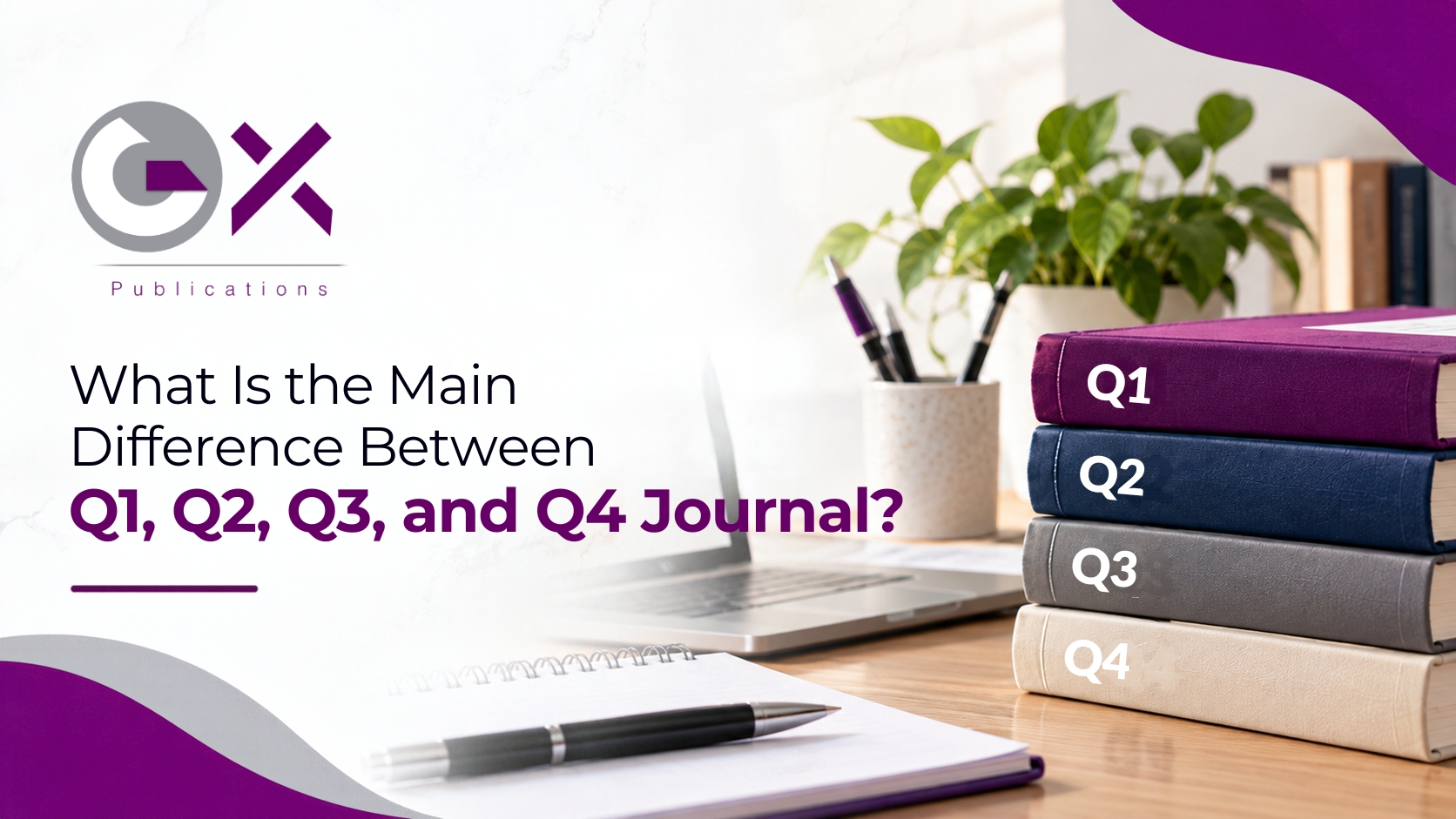
For instance, if the business management researcher aims to get his/her work published internationally, he/she could choose journals that are indexed in the category of Scopus Q1 or Q2 journals because journals indexed in Q1 or Q2 are more likely to get citations and more widely read.
While simultaneously scientists should not be overly ambitious but also realistic. Low acceptance rates generally go hand-in-hand with extremely high impact journals. Getting articles published in well-known mid-tier journals can be a good approach as well.
Develop a routine for publishing and follow it
A publication here and there every few years does not have a great academic impact. To develop continually in one's academic career, consistency is key.
A group of proficient researchers typically has a research pipeline consisting of:
- Ongoing data collection
- Manuscripts under review
- Collaborative projects
Under development conference papers are:
- Book chapter opportunities
By following this systematic approach one will not have to wait long periods between publications.
Publishing habits are useful for scholars pursuing a PhD in particular, and will help them in the long run. When publishing during your doctoral studies, it shows initiative and contributes to developing your academic identity prior to entering competitive academic job markets.
One approach that can be taken is to establish goals for publishing every year. For example:
- One journal article
- One conference presentation
- One collaborative publication
- One review paper
It's the little steps that add up.
Work together with other researchers
Internet collaboration has become the norm for academic publishing. Multi-author publications can benefit from increased visibility, as they will be composed by experts, have networks, and have different perspectives.
Working together has a number of advantages:
- Shared research workload
- Students will also have an opportunity to learn about new methodologies.
- These will provide access to a broader range of data.
- Increased publication opportunities
- Stronger interdisciplinary impact
Early career researchers can learn quicker from established researchers, and may find their publications have higher quality.
Many international research teams are an example of a real-world scenario; in such a setting, younger (data collecting and analysis) and older (conceptual framing and writing strategy) scholars can collaborate and learn from one another. These partnerships can result in more effective and collaborative products and networks.
But transparency is crucial, however. The role of the author(s) must be clearly defined at the beginning and needs to be discussed with them so as to prevent any future ethical conflict.
Create Research Visibility that goes beyond Publishing
There is a need to publish only. Researchers need to take more action to increase research visibility post-publication.
It is not its lack of merit, but rather, few people know it exists, that there are many good papers that have not been cited.
Today, modern scholars are more and more advocating their research via:
- Google Scholar profiles
- ResearchGate
- Academic conferences
- University repositories
- Academic webinar/podcasts
Researchers, for instance, that post article abstracts on professional research sharing platforms tend to have increased downloads and engagement.
The presentations for conferences continue to be valuable. Students will have the opportunity to present work and to interact directly with peers, be given feedback from experts, and collaborate.
This increased visibility is a significant aspect of researcher branding and academic recognition.
Know why citations are important
Citations are sometimes regarded as "academic currency. They show that other researchers are working on and extending your research.
Although a large number of citations should not be used as a sole measure of the quality of research, these citations do affect:
- Institutional rankings
- Grant applications
- Faculty evaluations
- Research impact assessments
Fill in Relevant Topics:
More attention is given to research that deals with topic of current interests or issues in the world or the discipline.
Use Search-Friendly Titles
Descriptive titles will work for the discoverability.
Include Strong Keywords
For indexing, the key word(s) and abstracts need to be well optimized.
Publish Review Papers
Review articles tend to be cited more often as they are a summary of a wide area of research.
Network Academically
Scholars in their research often refer to others they meet at conferences, seminars or joint events.
With time, more powerful citations provide both a stronger academic footing and more impact on scholarship.
Learn about and prevent common publishing errors
Many researchers inadvertently taint their academic reputation with "straws in the wind" that take the form of errors.Many researchers make mistakes that they don't need to make and jeopardize their academic profile as a result.
The following are some of the common mistakes:
Renting journals at un-profitable rates and publishing in journals that do not pay.
Often these journals are quick to publish without proper peer-review. They may be a temptation, but they can have a very negative impact on professional reputation.
Ignoring Publication Ethics
Academic dishonesty is a career killer and will ruin careers in the long run.Plagiarism, duplicate submissions and manipulated data will kill a career in the long run.
Seeing the printed word and thinking only about how many.
It is hardly possible to gain authority from too many low-quality publications.
Neglecting Networking
Communities are a setting of research flourishment. Limited opportunities and visibility due to isolation.
Poor Manuscript Preparation
Poorly formulated thesis statements, vague arguments, and poorly done literature reviews decrease the likelihood of being accepted.
It is important to adhere to ethical and professional standards in order to be successful in scholarly publishing in the long run.
Students will use Publishing to Shape Your Academic Identity
Publishing is more than a regulation. It's a type of intellectual positioning.
All publications have an impact on one's peer image of one's expertise.
For example:
- This association of a sustainability scholar who is continuously producing research in the field of climate policy with environmental governance is one of the most notable features. One of the most remarkable is the association of a sustainability scholar who does consistently publish climate policy research with environmental governance.
- A hospitality researcher with a special interest in tourism, who contributes to digital transformation in the hospitality industry. One becomes a known public health expert on the topic of pandemic preparedness when publishing studies on it.
- Differential identity processes are the core of academic profile construction.
To many researchers, intentionally developing their publication themes leads to being preferred speaker, collaborator, reviewers and contributors in their field.
The part of books and book chapters
However, book and edited chapters have also a great academic value, particularly in humanities, social sciences, education, and interdisciplinary research fields, where they are also used by many scholars.
Converting dissertations to books, editing books together, or writing textbooks is a good way to build scholarly visibility.
Books provide the opportunity to delve deeply into complex ideas, and can sometimes be accessible to a wider audience than other types of publication.
Books often get to be signature works for many senior scholars and become an intellectual legacy.
Advance your research career with these tips for publication - Early Career Scholars.
It's daunting to people who are beginning their publishing career. But, strategic planning can have a great impact.
Here are some tips on how to get articles published in the research vein:
Start Small
Start with conference papers, review papers or group projects.
Thoroughly read the Journal Guidelines
Many researchers don't realize formatting and submission compliance is crucial.
It is important to embrace the place of Rejection. A smart teacher gets rejected as well every once in a while.
Seek Mentorship
Supervisors and senior researchers give feedback which enhances the quality of the manuscript.
Revise Thoroughly
The majority of accepted papers undergo several revisions until these are published.
Stay Updated
Keep up to date with current issues, practice and publishing trends in your field.
Often the difference between occasional researchers and those who have a significant career is persistence.
The Future of Scholarly Publishing
With the advent of digitalization, open access, AI tools for research and global collaboration networks, academic publishing is rapidly changing.
Future scholars will also be required to have more communication ability in the digital world and in addition to their traditional skills.
In particular, open access has been increasing the worldwide access to research. Openly available papers have consistently been found to have more visibility and number of citations.
Meanwhile, the ethical issues surrounding AI-driven content creation, integrity in the publication process and misinformation are growing. In this rapidly changing world those who continue to have rigorous standards and a genuine expertise will be more clear cut.
In the end, it is the responsibility of researchers to do quality research, ethical practices, being seen, and engaging in meaningful academic work, which is the future of scholarly publishing.
Conclusion
Developing a good academic portfolio by publishing is an investment in your career. A good academic reputation cannot be achieved by a single publication and is not dependent on publications alone. They appear via regular, excellent engagement, visibility, and ethical scholarship in research communities.
Researchers who adopt a successful academic publishing strategy will be successful in moving beyond publishing papers to being influential, authoritative and recognized in the academic community. With emphasis on quality research, finding reputable journals, making research easily accessible and establishing a research profile, researchers can greatly enhance their academic credibility and future academic trajectory.
In an era of global and competitive knowledge production, publishing continues to be one of the most influential means for scholars to influence the conversation, inspire innovation, and be an intellectual force for the ages.


Comments (0)
No comments yet. Be the first to share your thoughts!
Leave a Reply
Your email address will not be published. Required fields are marked *