






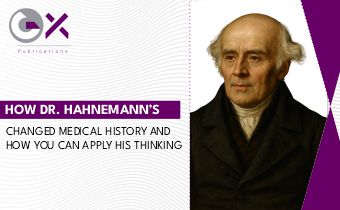
Introduction: A Revolutionary in Medicine
Samuel Hahnemann is one of the most controversial, but possibly the most significant figures in the history of medicine. When medical care was commonly rough, invasive and even destructive, Hahnemann came up with a completely new philosophy, which was the focus on gentleness, individualization, and the natural curative powers of the human body. His work has been the basis of Homeopathy, which is still practiced in the world today.
Hahnemann did not only suggest a new approach to treatment; he questioned the fundamentals of medicine of the late 18th and early 19th centuries. His thought process changed the focus to the aggressive intervention towards the patient-centered care- a concept that still echoes well even in the contemporary healthcare.
For one to appreciate the significance of Hahnemann's contribution, it is important to examine the prevailing conditions in medicine during his time. Some of the practices included bloodletting, purgation, and even the use of poisonous elements such as mercury. These practices made people weak rather than heal them.
Medical science did not have standardized clinical trials, ethics and in-depth knowledge of the mechanisms of the disease. Doctors were more dependent on tradition as opposed to empirical observation. It was here that Hahnemann started to challenge the status quo.
Dissatisfaction with the traditional practices made him temporarily give up medicine only to come back with a new vision; a vision based on observation, experimentation, and logic.
The law of Like Cures Like
The fundamental idea of the philosophy of Hahnemann is the principle of “similia similibus curentur “or like cures like. This concept implies that a drug which can cause symptoms on a healthy individual can in low doses cure similar symptoms on a diseased individual.
This principle was discovered following a renowned experiment of Hahnemann on the use of cinchona bark, which is used to treat malaria. He had symptoms akin to malaria and after consuming it himself, he theorized that there was a relationship between the drug and the illness.
Controversial as it may be, this principle has brought a fresh approach to the thinking about treatment which is not based only on the labels of the diseases but patterns of symptoms. It motivated doctors to be more attentive to patients and customize medication.
Individualization of Treatment
The concept of individualized treatment, which was one of the most lasting contributions of Hahnemann. He was of the view that no two patients are the same, although they may have the same diagnosis.
In homeopathic medicine, the treatment is founded on:
- Physical symptoms
- Emotional and mental conditions.
- Environmental and lifestyle.
Concept of Minimum Dose
Hahnemann came up with the principle of administering the lowest dose that will stimulate healing without causing harm. He came up with a dilution and potentization process since he thought that lower doses would minimize side effects and still have therapeutic effects.
This method was groundbreaking since it focused on patient health and safety- a notion that is consistent with the current pharmacological trend of reducing adverse effects.
Stress on Observation and Experimentation
Hahnemann was a very careful observer. According to him, treatments ought to be founded on close experimentation and record keeping.
He also coined the concept of provings in which the substances were experimented on healthy persons to document their effects. Although it was not the approach used in the contemporary clinical trials, this method was an early effort at the systematic organisation of medical research.
His emphasis on observation as opposed to blind tradition helped to develop evidence-based thinking in medicine.
Humanizing Medical Practice
Humanization of medicine perhaps was one of the most significant contributions of Hahnemann. He did not make a distinction between patients and cases but focused on treating them as individuals with empathy, listening, and understanding.
This was a revolutionary method at a time when the field of medicine was very impersonal and cruel. It has established the foundation of patient-centered care, which is regarded as one of the foundations of contemporary healthcare systems.
Criticism and Controversy
The legacy of Hahnemann should be dealt with in moderation. The scientific community has been very critical of homeopathy especially with regard to the effectiveness of highly diluted remedies.
The modern evidence-based medicine tends to doubt the mechanisms suggested by homeopathy. Nevertheless, even the critics admit that Hahnemann focus on patient care, safety and observation had a positive impact on the development of medicine.
How Hahnemann Revolutionized Medicine
Hahnemann had a greater impact than just homeopathy. His theories were part of a number of general changes in medicine:
- Out of damaging interventions to less damaging treatments.
- Generalized to individualized care.
- Tradition-based practice to reasoning based on observation.
- A physician-centered care to patient-centered care.
These developments are in line with the ideals that are characteristic of contemporary healthcare.
Using the Hahnemann Thinking in Modern Life
Although not every technique by Hahnemann is universally applicable in modern times, his paradigm of thought is very applicable not only to medicine, but also to any other decision-making process.
1. Be a Critical thinker and challenge Norms
Hahnemann did not believe in the current practices. He interrogated them, put them to the test and found superior alternatives.
Application:
- Defy conventions in your area.
- Ask to find out the truth.
- Be open to innovation
2. Focus on Individualization
Similar to Hahnemann, who approached each patient in a unique way, contemporary professionals can be helped by personalized treatment.
Application:
- Create solutions that are customized.
- Avoid generic strategies
- Know the situation prior to taking action.
3. Be Safety and Sustainability focused
The concept of minimum dose is a generalized concept: to do as little as possible and get results.
Application:
- Avoid overcomplicating solutions
- Concentrate on sustainability and efficiency.
- Reduce risks in decision making.
4. Observe Before Acting
The approaches of Hahnemann were based on close observation.
Application:
- Analyze situations thoroughly
- Collect information prior to decision making.
- Avoid impulsive actions
5. Have a Holistic View
Hahnemann took into consideration physical, emotional and environmental factors.
Application:
- Consider issues in various perspectives.
- Consider long-term consequences
- Integrate different perspectives
6. Be Empathic and Human-Centered
His patient-centered practice is very applicable in the modern times.
Application:
- Listen actively
- Understand stakeholder needs
- Develop trust by caring.
7. Innovate with Purpose
Hahnemann was motivated to write his work by the need to enhance patient care.
Application:
- Be goal-oriented in innovation.
- Concentrate on impact.
- Act in ways that are consistent with values.
Applicability in the modern healthcare and beyond.
In modern medicine, although mostly scientifically-grounded, there is a growing trend of integrating into practice principles that resonate with the thinking of Hahnemann:
- Personalized medicine
- Preventive care
- Holistic health approaches
- Patient-centered communication
His philosophy extends to the healthcare sector, which is relevant to business, education, leadership, and research, where critical thinking, innovation, and human-centered methods are appreciated.
Conclusion
Not only was Samuel Hahnemann the founder of a new approach to the practice of medicine, but he was also a philosopher who challenged existing conventions and changed the position of medicine. Emphasis on observation, individualism, and empathy marked a new era for the field of medicine.
Although there are still controversies regarding homeopathy, the concepts of his method are eternal. Through his approach to thinking (challenging the status quo, putting people first, and aiming to innovate in a thoughtful manner), you can use his thinking technique in many areas outside the field of medicine.
Finally, the heritage of Hahnemann is not necessarily on how we treat sickness, but on how we think, analyze, and behave so as to achieve better results.





Comments (0)
No comments yet. Be the first to share your thoughts!
Leave a Reply
Your email address will not be published. Required fields are marked *